


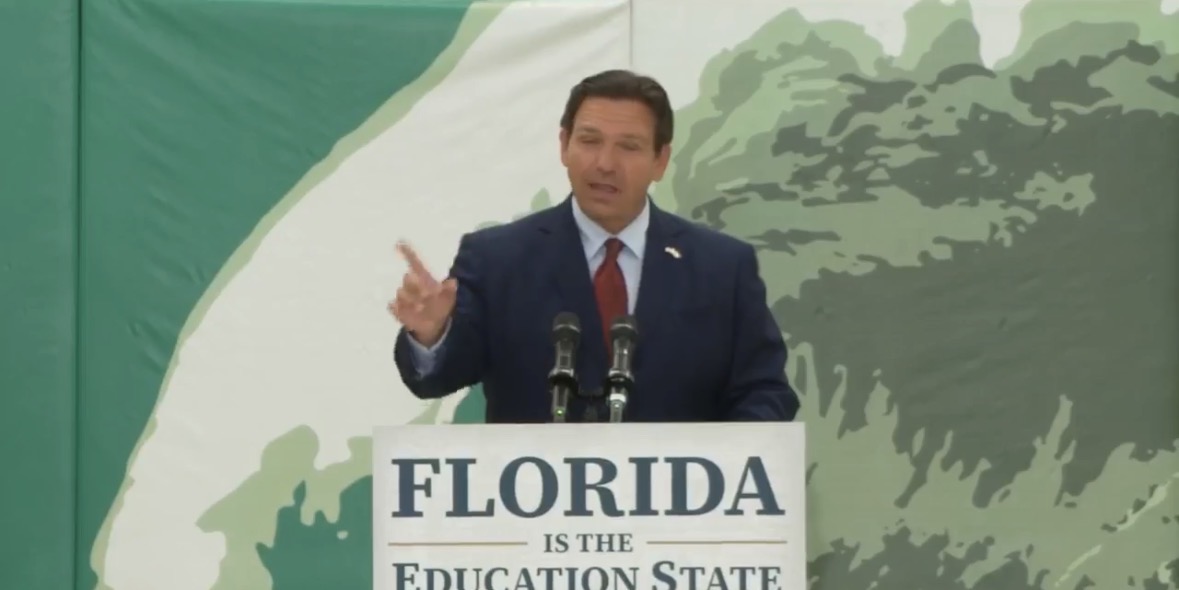
Florida Governor Ron DeSantis signed two education bills, Senate Bill 1296 and House Bill 1279, aimed at changing the way teachers unions operate, accelerating pay increases and expanding incentives for educators.
State officials said the bill aims to increase transparency in union representation, streamline pay adjustments and give districts more flexibility in compensating teachers and placing them in high-need schools.
“Today’s bill builds on Florida’s recent education policy and focuses on teacher pay and student outcomes,” DeSantis said at the bill signing in Fort Myers.
Florida Education Commissioner Anastasios Kamousas said the measure aims to “remove barriers, recognize excellence and increase transparency,” while also requiring unions to maintain support from educators to continue representing them.
Union recognition and teacher pay changes

SB 1296 includes several provisions that impact teachers unions and compensation.
Requires participation of at least 50% of eligible members in union certification or recertification elections. Tightens penalties for illegal teacher strikes, increasing fines from $20,000 to $40,000 per day. Establish a faster process for implementing teacher pay increases. State leaders say the goal is to prevent delays caused by negotiations.
Expanding eligibility for teacher incentives and bonuses
HB 1279 focuses on teacher staffing and compensation flexibility at the district level.
Allowing school districts to provide financial incentives directly to high-performing teachers who choose to work in low-performing schools, outside of traditional collective bargaining structures. Expands bonus eligibility for teachers offering Florida Advanced courses and aligns with incentives already provided to Advanced Placement (AP) and International Baccalaureate (IB) instructors. State officials say it includes provisions regarding parental rights in special education.
Supporters say the bill would give school districts more tools to address staffing challenges and reward performance, while critics have raised concerns about changes to collective bargaining requirements and union participation standards in past discussions.
The new law takes effect as Florida continues to implement a series of education policy changes enacted in recent years.

