


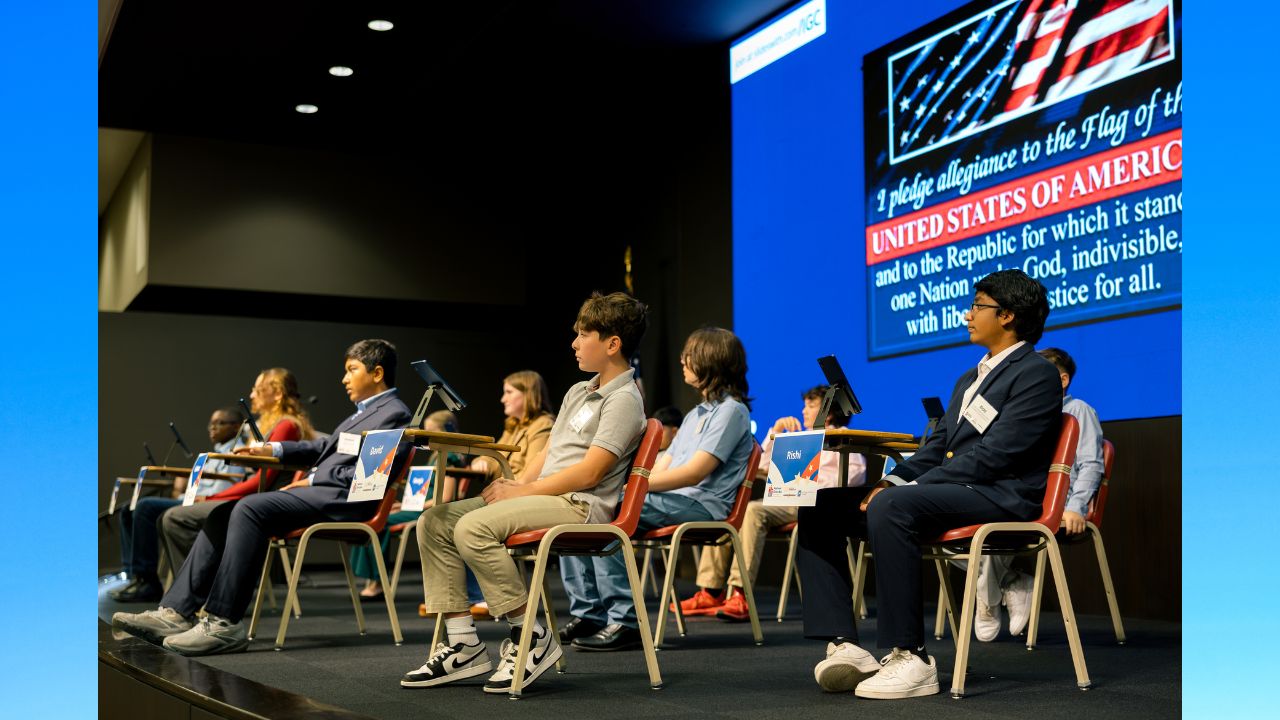
Democracy is only as strong as a people who understand how it works. Florida has taken that idea to heart and is investing in civics education starting in the early grades. This summer, I saw that investment pay off as Tallahassee event halls filled with middle school students, their families, and the buzz of anticipation.
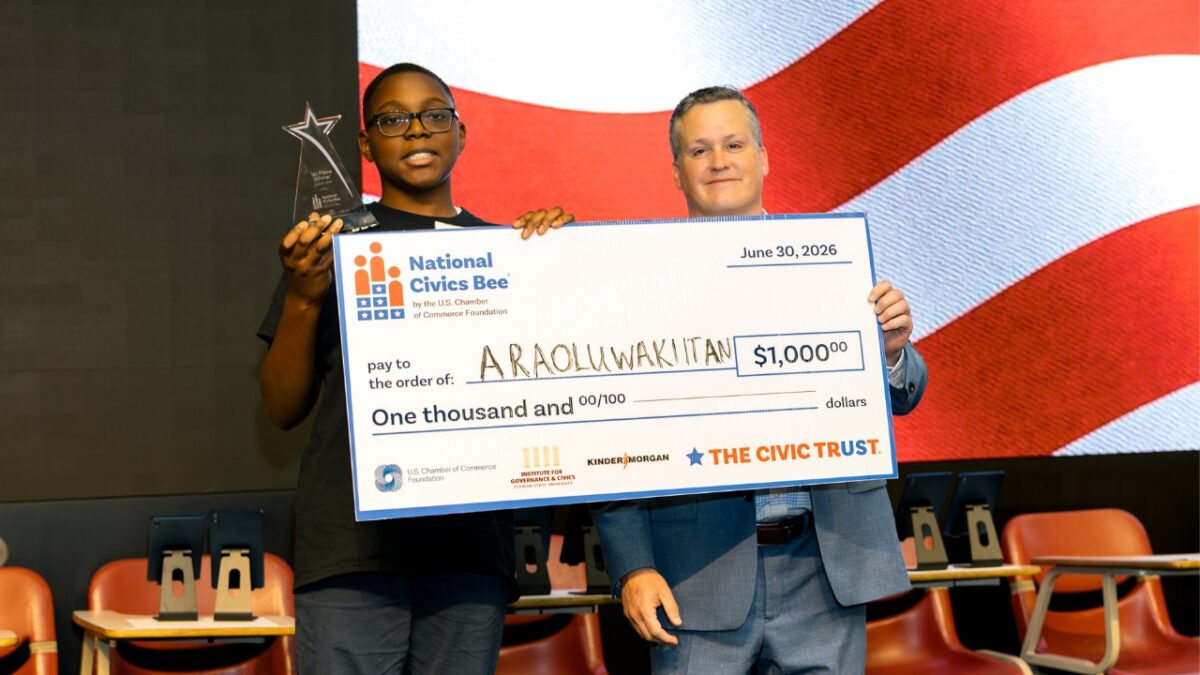
At the end of June, Florida State University’s Institute for Governance and Civics (IGC) hosted the Florida-wide finals of the National Civics Bee®, a competition for middle school students. Twelve middle school students from across the state qualified by writing essays about issues in their communities and connecting them to the nation’s founding principles. On stage, they answered a series of tough civic questions about the separation of powers, the founding documents, and the ideals on which this country was founded. Out of 20 questions, most students only got one wrong.
That level of knowledge is not the norm. A study by the U.S. Chamber of Commerce Foundation found that more than 70% of Americans fail a basic civic literacy quiz. At IGC, our own research shows that less than half of Floridians surveyed can correctly answer five basic civics questions.
When people don’t understand how their government works and how their rights are protected, they lose trust in institutions and become less likely to participate in elections and civic life. Watching a roomful of 12-year-olds outperform most adults is more than just fascinating. It’s proof that trends can be reversed.

What impressed me most was what the students chose to talk about. Disparities in human trafficking, drug abuse, public transportation, and life-saving cardiopulmonary resuscitation for women, among others. They connected enduring democratic principles to the lives of their neighbors and were ready to walk into the offices of elected officials and ask how they could help. Before joining IGC, after working for more than 20 years in local government in Florida, I thought: Our communities would be better off if all public servants brought the civic skills that our students already have.
This is the deeper reason why missions are important. A self-governing republic depends on its people understanding how it works, and that understanding must be taught to new generations. Florida has treated it as a collective responsibility. When the state Legislature created the IGC in 2023, it charged the institute with promoting civic literacy throughout the state. That means developing educational tools and resources for students and the teachers who teach them. This mission shapes everything we do.

Our research department produces opinion polls that show where citizens’ knowledge stands. Our program leverages that knowledge. Beyond the classroom, IGC has built an interdisciplinary degree in civil and liberty studies and a speaker series that allows students to hear ideas from a wide range of disciplines. He also established Florida’s first First Amendment Clinic at FSU Law School.
But some of our most important efforts reach our students even sooner. Behind every student gearing up on the Civics Bee stage is usually a dedicated teacher. Every summer, we bring civics educators from across the state to FSU to learn how to teach founding documents, from the Declaration of Independence to the Constitution and other primary sources, in ways that bring these dense, centuries-old documents to life. Two summers ago, 40 teachers came. This summer, 160 people participated, a fourfold increase. It’s momentum.
Florida has made a deliberate choice to take civic education seriously. This summer, I saw that choice pay off in front of 12 talented students. It’s a choice worth updating, strengthening, and making again and again.
Lyla Seagle is the Associate Director of the Institute for Governance and Civics (IGC) at Florida State University. For more information about IGC, visit igc.fsu.edu.
