


Written by Pastor Russell L. Meyer
Florida parents often think measles is a virus their children will never face. Measles appears to be a disease that has been conquered. You won’t find it in school pick-up lines or pediatric waiting rooms; it’s a historical medical achievement of the past. Unfortunately, that assumption is incorrect.
Measles cases have been reported across the state, with six in Duval County, 103 in Collier County and 145 cases statewide, according to the Florida Department of Health’s Office of Epidemiology. These are important numbers. They qualify as measles outbreaks.
Measles is a dangerous and even fatal childhood disease. It is one of the most contagious viruses in the world. The disease spreads through breathing and contact up to four days before symptoms appear, and according to the Centers for Disease Control and Prevention, one person who gets measles can infect up to nine out of 10 people around them.
Measles can spread rapidly in large, interconnected communities. Families share schools, churches, childcare centers, and community spaces every day. If just a few people get infected, it can quickly become an outbreak. And those most at risk of infection are infants, the elderly, and people with weakened immune systems.
Florida’s vaccination rates help explain how an outbreak could occur. Approximately 89 percent of Florida’s kindergartners are fully vaccinated against measles, mumps, and rubella. Public health experts agree that 95% coverage is needed to prevent an outbreak. When vaccination rates fall below that threshold, the risk increases significantly. It spreads from home to home, between houses of worship, and from one community to another.
For Florida families, the impact of low vaccination rates is severe. Schools are facing disruption. My parents are off work. Hospitals are burdened with preventable burdens. In the most severe cases, children and vulnerable adults can suffer lifelong complications or even death.
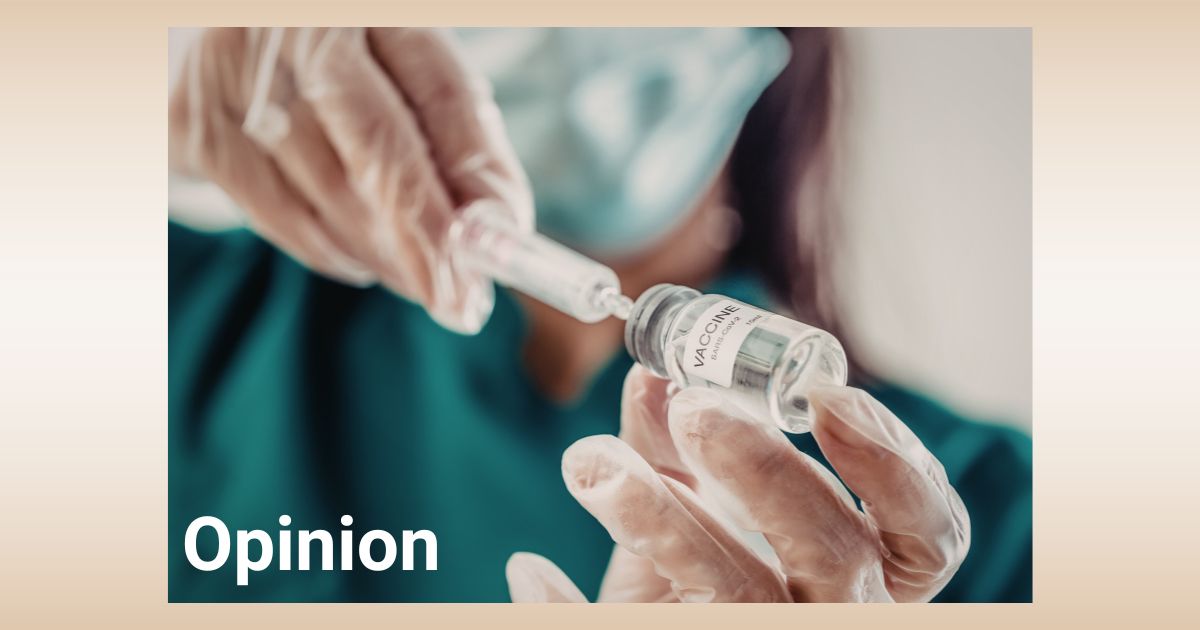
Two doses of the measles, mumps, rubella (MMR) vaccine are nearly 97% effective in preventing measles. High vaccination rates eliminated the presence of the disease in the United States by 2000. But we now see that we are failing to consistently maintain lifesaving vaccination rates. Measles virus persists in the environment and can inadvertently infect unvaccinated children.
It’s heartbreaking to think that an unvaccinated child could come home from school and transmit deadly measles to a newborn sibling, an elderly grandparent, or a family member battling cancer. However, this scenario plays out with low vaccination rates. When we vaccinate ourselves, we also protect others, especially those who are unable to protect themselves. Our goal should always be to free people from disease, especially those who cannot be vaccinated.
Faith seeks understanding, embraces knowledge, and welcomes beneficial innovation. Faith calls us to seek truth, exercise wisdom, and act responsibly. We rely on clean water, seatbelts, smoke alarms, and safe food to keep us safe from harm. And when our neighbors go on vacation, we take care of their homes. Our quality of life also includes the well-being of those around us. Vaccines are in the same category in terms of proven protection and storage.
Concerns have been raised about vaccines in recent years, and the issue will be discussed at next week’s special legislative session. Asking questions is good, responsible parenting so you can make informed choices about your child’s health. Consult your pediatrician or family doctor. Misinformation abounds, especially on social media, where incentives are geared toward media hits rather than verified and proven facts. Don’t let the clicks fool you. Fear spreads like wildfire faster than facts.
It’s probably no coincidence that preventable diseases are rebounding just as social media influencers are cashing in on fear-mongering attention. But we know that “perfect love casts out fear.” Florida’s strength is best measured not by fear, division, or going it alone, but by how well our lives support each other’s well-being. As the Bible reminds us, “Let each one of you look not only to his own interests, but also to the interests of others” (Philippians 2:4). Our freedom is not for our own self-indulgence (Galatians 5:13).
Choosing prevention, truth, and shared responsibility is one way we fulfill our mission to exercise our freedom to love one another. That is a faith that is active in love.
The Rev. Russell L. Meyer is executive director of the Florida Council of Churches and pastor of St. John’s Lutheran Church in Jacksonville. An interfaith leader and longtime champion of the common good, he works with faith communities across Florida on issues such as health care, climate, and justice.
