


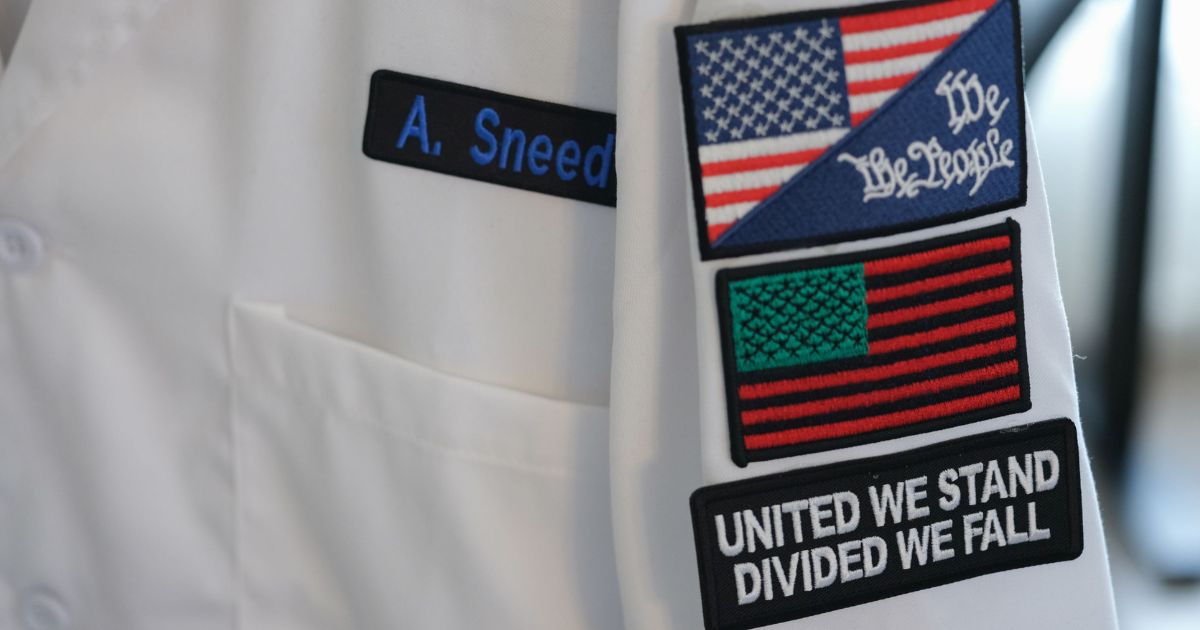
On February 16, 2026, Space Coast founder Aaron Snead became president of Leak Test Specialists (LTS), a long-standing leak testing and non-destructive testing company located in Brevard County, Florida.
At first glance, this move may seem unusual. Sneed is the founder of Defense Operations & Execution Solutions, Inc. (DOES), an AI and digital engineering company focused on regulated manufacturing, defense technology, and domestic industrial resilience. LTS is a field service company built around leak testing, inspection, documentation, and technical execution.
But when you understand Sneed’s theory, the connection becomes clear. Just because AI sounds impressive doesn’t mean it’s valuable in industry. Value increases when people can prove what happened, document decisions, reduce risk, and support work where mistakes have significant consequences.
That’s the difference between AI hype and industrial AI.
From AI concept to regulated reality
One of DOES’ core platforms is TITAN-AI, a pilot-stage smart manufacturing system designed to support the safe and traceable production of active pharmaceutical ingredients (APIs) and essential medicines in the United States.

In a presentation, DOES explained that TITAN-AI combines artificial intelligence, automation, process analytical technology (PAT), and GaN-based edge computing to improve monitoring, traceability, and control in regulated manufacturing environments. The announcement also revealed the important feature that TITAN-AI is a production pilot and does not claim medical product or regulatory approval.
That distinction is important.
In regulated industries, the question is not just whether the system is smart. The question is whether it can support documentation, investigation, verification, human oversight, and compliance expectations. In other words, can the system withstand intense scrutiny?
This is where Sneed’s background comes into play. His career spans aerospace, defense, systems engineering, program execution, trade compliance, advanced manufacturing, and digital engineering. His work has iterated around high-results environments where documentation, traceability, and disciplined execution are not optional.
Strategic transition to LTS
LTS provides Sneed with a different, but very practical, testing ground.
Leak testing is not a glamorous job. This is essential work. In nuclear, aerospace, space, biotech, microelectronics, and other regulated industrial environments, leak integrity is directly tied to safety, quality, uptime, and customer confidence.
Leak testing is not a slogan. It’s the procedures, technicians, calibrated equipment, scope of work, results, records, and often customer reviews.
As such, LTS is a natural fit with Sneed’s proof-first approach to industrial AI. Opportunity is not about replacing technical people or quality leaders. The opportunity is to strengthen the systems surrounding them, including training records, credentialing, job packets, field tickets, controlled documentation, customer clearing, and audit response records.
In Sneed’s model, engineers continue to play a central role. AI supports the OS mainly for engineers.
LTS wins when skilled people do great work and when companies can consistently prove it.
LeakWatch and the “Prove It” standard
DOES is also developing a concept for LeakWatch, an AI-assisted decision support approach for leak testing and regulated field service environments. The point is, AI won’t magically make nuclear or industrial systems safer. it’s not.
Importantly, AI can help organize evidence, surface risks, support decision-making, and improve visibility across tasks that already require human expertise, formal procedures, and documented reviews.
This is a more serious claim than “AI will change everything.” It’s even more convenient.
Confirmed to be safe in regulated environments. Quality is documented. Work is reviewed. Records will be kept. If AI is to become important in these areas, its operational realities must be respected.
Sneed’s internal governance posture reflects that. His AI Council framework treats AI as a layer of advice and verification, rather than a replacement for accountability. AI has the potential to prepare, challenge, structure, summarize, simulate, and verify. It cannot be endorsed, signed, classified, waived compliance, bound an entity, accept risk, or be held accountable.
This may sound less flashy than the usual AI headlines. It’s also much more reliable.
Snead also discussed large-scale construction on Florida’s Space Coast and why reshoring and regulated manufacturing are important in an op-ed for Florida Today.
DOES operating method: “AI Council”
Snead first gained widespread attention when Business Insider covered his use of an “AI Council,” a group of custom AI agents that support jobs such as legal, human resources, finance, planning, and chief of staff work. In the profile, Snead says the system saves him about 20 hours a week, but he says that’s a conservative estimate.
But it’s not the time savings that’s more interesting. That is our operating philosophy.
Sneed does not frame the council as a toy or a substitute for human judgment. He trained his agents to challenge ideas, surface risks, and avoid simply agreeing with him. Business Insider also highlighted this broader issue. AI agents can become overly sympathetic, creating a risk for entrepreneurs unless the system is intentionally trained to be repulsive.
That’s the core of Sneed’s approach.
The goal is not to hallucinate faster. The goal is to improve judgment.
His governance document describes the council as a system for making decisions, assumptions, risks, commitments, public claims, entity boundaries, technical evidence, leadership capabilities, and mission obligations visible, challenged, owned, verified, and auditable before action.
The language may not sound like Silicon Valley poetry. It seems like an industry. That’s the point.
For readers who want more background, DOES is also the subject of the following business case materials:
Harvard Business Publishing: https://www.hbsp.harvard.edu/product/W44917-PDF-ENG Ivy Publishing: https://www.iveypublishing.ca/s/product/does-commercializing-ai-in-regulated-pharma-manufacturing/01tOF00000B0l5RYAR
Why should Florida care?
Florida’s Space Coast already understands the work that brings big results. Space launch, aerospace, defense, energy, advanced manufacturing, and regulated infrastructure all share a common reality: they need to perform work in the real world, not just inside a slide deck.
That’s why Sneed’s move is so important.
TITAN-AI speaks to the long game of domestic manufacturing capacity, pharmaceutical resiliency, advanced digital controls, and safer production of critical raw materials.
LTS talks about the challenges at hand: field execution, breach integrity, regulated documentation, and customer trust.
Together, they create useful models of what industrial AI should look like. AI is not a replacement for skilled labor. AI is not a shortcut to compliance. AI is not just a buzzword pasted onto an old process.
AI as discipline. AI as visibility. AI as decision support. AI is a tool that helps people do high-consequence work with better evidence and fewer blind spots.
Sneed’s bet is that the future of industrial AI will not be won by the loudest demonstrations.
Systems that can pass an audit will win.
And Florida’s Space Coast just might have a future worth building.

