


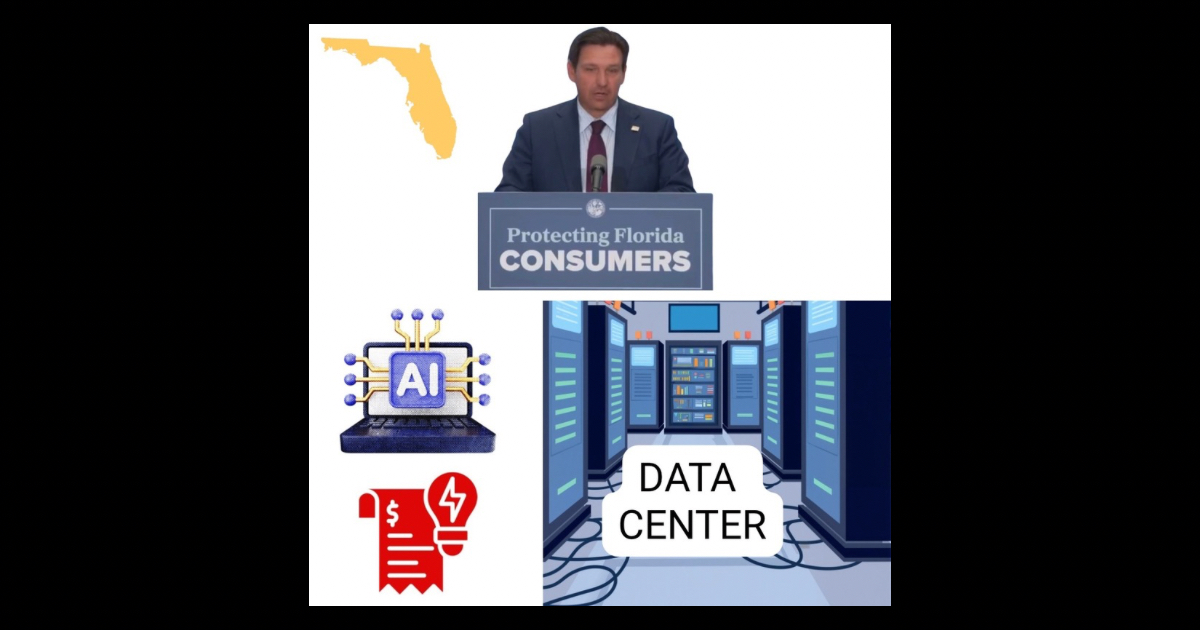
As data center projects emerge as one of the most hotly debated issues in the nation, Florida Governor Ron DeSantis signed SB 484 into law, a new Florida law aimed at limiting the impact of large “hyperscale” data centers associated with the growth of artificial intelligence. The measures focus on protecting electricity ratepayers, maintaining local control over development decisions, and addressing concerns about water and energy consumption.
During a bill-signing event at the Florida Institute of Technology, DeSantis said Floridians should not pay higher electricity bills because of expanded AI infrastructure. He also expressed concern about the long-term impact of the growth of artificial intelligence on the environment and society. Supporters of the bill noted that massive expansion of data centers in states such as Virginia has increased stress on power grids and water supplies. Florida lawmakers cited predictions that U.S. data center demand could triple by 2030 due to accelerated use of AI.
Key Impacts of SB 484
If there are major changes to the project, a new application review will be required.
Protecting consumers from rising utility costs

Utilities cannot pass on data center-related electricity and infrastructure costs to residential or small business customers.
Large data center operators must pay the full cost of the service.
The law seeks to prevent taxpayers and ratepayers from subsidizing AI-related infrastructure expansion.
strengthen the authority of local governments
Cities and counties retain authority over zoning, permitting, and land use decisions regarding data centers.
Local governments can impose stricter standards or reject proposed projects altogether.
The bill would increase local oversight instead of creating automatic statewide approval.
Adding restrictions and transparency requirements
Utility companies are prohibited from providing services to data centers owned or controlled by foreign countries deemed to pose security concerns.
Data center agreements must eventually be made public after the temporary confidentiality period ends.
This law establishes clearer legal definitions with the aim of preventing loopholes.
Create new environmental and infrastructure standards
Large data centers will require a dedicated permitting process.
Projects may use reclaimed water as part of permitting requirements.
Business groups opposed portions of the bill during the legislative process, arguing that the regulations could stifle economic development and impose extra burdens on data center projects compared to other industrial facilities.
The legislation follows the DeSantis administration’s scrutiny of proposed large-scale projects, including a 4.4 million-square-foot data center planned for Fort Meade that could use up to 50,000 gallons of water per day.

