


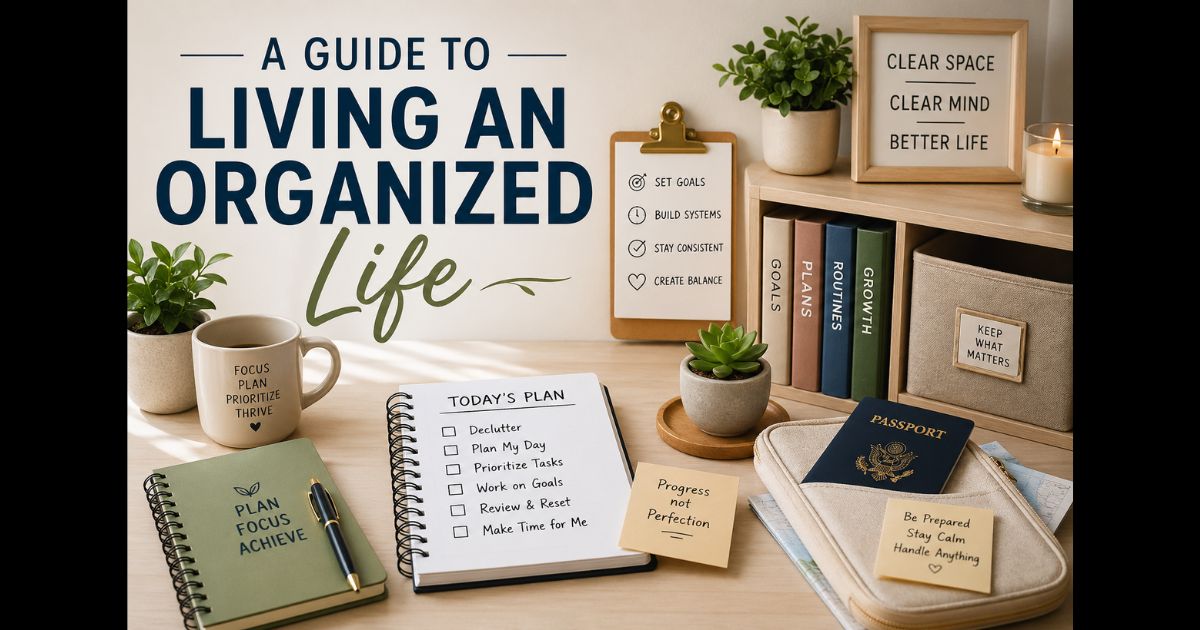
Living a planned life doesn’t mean perfection or a strict routine. It’s about creating a sense of control, clarity, and tranquility in your everyday world. When things are organized, you spend less time looking for what you need and more time focusing on what really matters. Whether it’s your home, your schedule, or your personal goals, decluttering can help reduce stress and increase productivity in a natural and sustainable way.
A planned life also gives you flexibility. Contrary to popular belief, being organized does not mean planning every minute. Instead, it means putting systems in place that make it easier and less burdensome to adapt to change.
Start by organizing your space
One of the most effective ways to start living a regular life is to declutter your surroundings. Physical clutter often leads to mental clutter, making it difficult to stay focused and motivated. Start small and tackle one drawer, shelf, or room at a time.
As you organize your belongings, ask yourself if each item serves a purpose or adds value to your life. If not, it may be time to let it go. Creating a clean and tidy environment not only improves efficiency, but also creates a more relaxing and enjoyable living space.
Build a simple daily system
Organizations grow through consistency. That’s where a daily system comes in handy. Instead of relying solely on memory and motivation, create a simple routine to guide your day. This might include setting aside time each morning to plan your tasks or finishing the day by tidying up your space.

Tools like calendars, to-do lists, and digital apps can help you keep everything in one place. The important thing is to find a system that works for you and stick with it. Over time, these small habits will become second nature and help you stay organized.
prioritize what really matters
The key to living an organized life is knowing what is worth your time and energy. Without clear priorities, it’s easy to feel overwhelmed or pulled in too many different directions. Take the time to identify your short-term and long-term goals and adjust your daily actions accordingly.
When you focus on what’s most important, it’s easier to turn down distractions and unnecessary commitments. This not only increases productivity; It also creates more space for rest, creativity, and personal growth.
Be prepared for the unexpected
No matter how well-planned you are, unexpected things always happen in life. Being prepared can make a big difference in how you handle these moments. Having access to important documents, maintaining backups of important information, and having a contingency plan can save you a lot of stress.
For example, if you lose an important travel document, knowing where you can immediately arrange for an emergency passport replacement will help you stay calm and return to normalcy without unnecessary panic. Preparation doesn’t mean expecting the worst. It’s about giving yourself the confidence to handle whatever comes your way.
Maintain organization over time
Getting organized is another thing, but staying organized is the real challenge. The key is to regularly review and adjust your system as your life changes. What works now may not work in a few months, and that’s perfectly fine.
Set aside time each week or month to reset your space, review your goals, and improve your routine. This ongoing commitment will ensure that your planned lifestyle continues to support you, rather than becoming a new source of pressure.
Create balance, not perfection
Finally, it’s important to remember that organizing is a tool to improve your life, not something to stress about. There will be days when things don’t go as planned, and that’s normal. The key is to have a foundation that helps you recover quickly and move forward easily.
By focusing on balance rather than perfection, you can create an organized life that feels natural, collaborative, and sustainable. Over time, these habits will not only improve your efficiency, but also improve your overall sense of well-being.

