


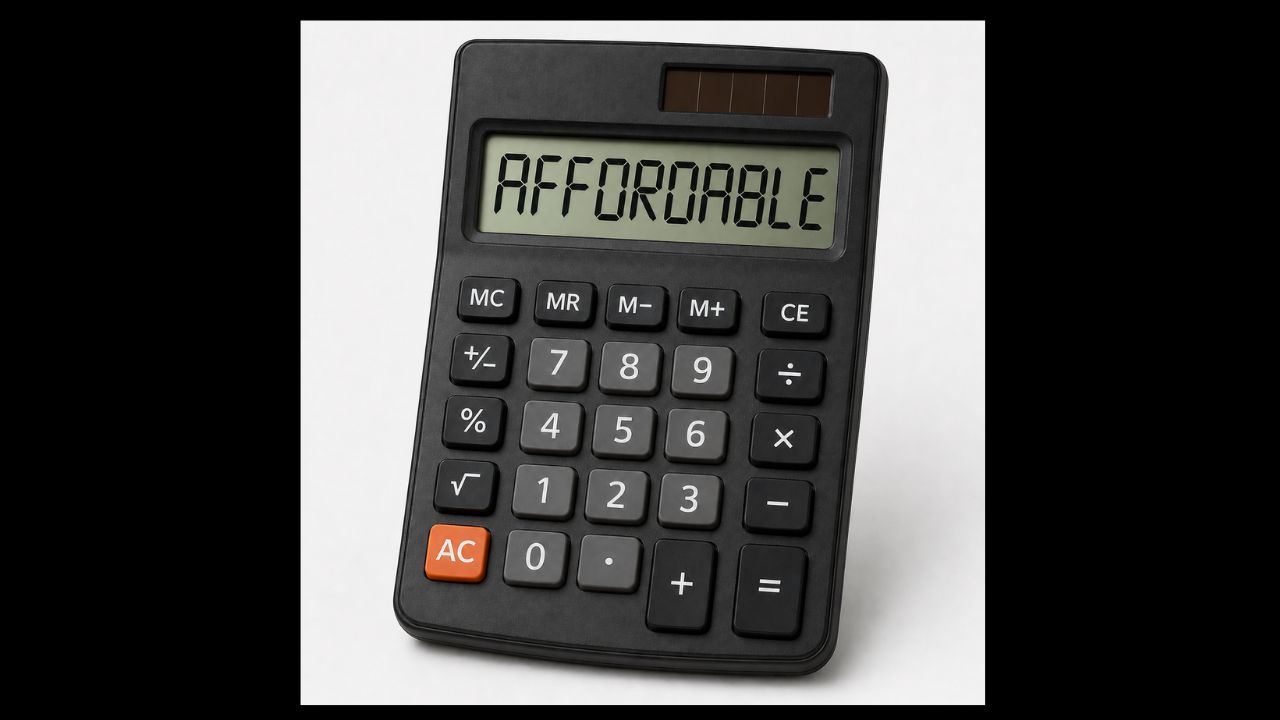
Lowering your monthly payments may feel like an instant financial victory. This number is easier to fit into your budget, leaves you with extra money in your checking account, and gives you the appearance of being able to manage big-ticket purchases. If your lender offers an extension to your repayment period, accepting it may seem like the obvious solution.
This is especially appealing when purchasing a home. Home affordability calculators can help you estimate your payments, but the monthly numbers are only part of your borrowing decision. A longer term reduces the amount left out of your account each month, but increases the number of years in which interest accumulates.
Extending your loan usually doesn’t reduce the original purchase price. The calendar will change. You will have more time to repay your principal and your lender will have more opportunity to charge you interest on your balance. Your payments will shrink as your obligations are spread out over a wider area of your future.
There will be a low payment somewhere.
Loan payments will not be lowered by generosity or clever paperwork. Something has to change.
Lenders may lower your interest rate, reduce the amount you borrow, or extend your repayment period. When the loan term is extended, the same principal is divided into more payments.

Imagine carrying a heavy box across a room. You can move the entire load at once and get it done right away, or you can break it up into smaller groups and move the load over several times. A smaller load may be easier, but the work will take longer.
Loans work in a similar way. Extending the term makes it easier to meet your monthly obligations. However, your unpaid balance will remain active for a longer period of time, so you will continue to be charged interest.
Lower payments are real. So is the long-term financial commitment that produced it.
Monthly affordability and total affordability are different
The word affordable is often used to describe payments that fit within your monthly budget. This definition is helpful, but incomplete.
Loans can be affordable on a month-to-month basis, but expensive over the entire term. You may not have a hard time making payments, but you’ll still end up spending thousands of dollars because of the longer repayment period.
This distinction is important because lenders and sellers often focus on monthly numbers. Paying $450 a month is more secure than having a total repayment of $32,000.
Both numbers represent the same match from different angles.
Monthly affordability asks whether your payments are commensurate with your current cash flow. Overall affordability asks whether the purchase is worth the principal, interest, fees, and years of restricted income required to complete the purchase.
Consider both to make the right borrowing decision.
Time gives you more room to pursue your interests
Interest is the price you pay for using someone else’s money.

The longer you hold the money, the longer the lender can charge you that price. Even if your interest rate stays the same, extending your repayment period can leave your balance remaining for an additional few months or years, potentially increasing the total amount of interest you pay.
Assume that the two loans have the same principal and interest rate. One is repaid over four years and the other is repaid over seven years. Seven-year loans typically have lower monthly payments because the balance is split into more installments.
However, the borrower remains in debt for an additional three years. Interest will continue to be calculated throughout the extension period.
The Consumer Financial Protection Bureau’s guidance on comparing auto loans explains that while longer loan terms mean lower payments, you may pay more in interest over the life of your loan.
Therefore, comparing only monthly payments can be misleading. The lower payments may simply be a tangible benefit of a much longer interest schedule.
You can purchase a valuable breathing room by extending your contract.
A long loan term is not necessarily a bad choice.
In some cases, cash flow may be more important than minimizing total interest costs. Households may need to save enough money each month for child care, medical care, emergency savings, and other essential expenses. Lower payments reduce the risk of missed claims and create room for fundamental stability.
Companies can also choose longer terms so that new equipment can start generating revenue before large payments are required. Homeowners facing temporary financial pressure may extend their loans to avoid late payments.
In such cases, the additional interest may act like compensation for flexibility.
The key question is whether that flexibility solves meaningful problems. Lowering your payments to protect essential needs is different from lowering your payments so you can borrow more than you originally planned.
Breathing room has value. You must be aware of this before purchasing.
Additional cash flow requires work
When the term is extended and your payments are reduced, the difference between your old and new payments is available for other purposes.
If you have a clear purpose, you can use that money to improve your financial situation. You can use it to build emergency savings, pay off high-interest debt, cover needed insurance, or stabilize irregular income cycles.
Without a plan, your free cash can disappear into regular expenses.
Let’s say extending your loan reduces your monthly payments by $180. If that amount is automatically transferred to your emergency fund, it could help create a beneficial financial cushion over a longer period of time. If that $180 is absorbed in a casual purchase, you could end up paying more in interest without getting permanent stability.
This will give you more leeway during the loan period. Your actions will determine whether the room provides protection or simply supports a more expensive lifestyle.
Before extending your term, decide exactly what you’ll be able to do with lower payments.
Over the long term, overpriced purchases may be hidden.
Discussions about monthly payments can distract buyers from the actual price of the item.
A salesperson may ask how much you want to pay each month, rather than how much you want to spend overall. By extending your loan, you can adjust your repayments to meet your goals, even if the purchase price is higher than you expected.
This is common with vehicle loans. A more expensive car may seem affordable when the loan is spread out over six or seven years.
The U.S. Federal Trade Commission’s Guide to Vehicle Financing advises buyers to consider the overall cost of financing, as a longer loan can reduce monthly payments and make the overall transaction more expensive.
Begin your negotiations with the purchase price, not the payment. Once you know the price, compare the annual percentage rate, fees, term, monthly repayment amount, and total repayment amount.
Comfortable payments should not be used to hide unpleasant prices.
Over the long term, stock price growth may slow down.
Equity is the portion of the property you actually own after deducting your loan balance.
A longer repayment period can slow the rate of capital growth, as smaller payments can reduce the principal over time. This is especially important for assets that lose value over time.
Cars often depreciate in value quickly. If your loan balance decreases more slowly than your car’s value, you can end up owing more than your car is worth. This condition is commonly referred to as negative equity.
Negative equity becomes an issue if you want to sell, trade in, or replace your car before the loan ends. The sale price may not be sufficient to pay the balance and the difference will be your responsibility.
Homes generally behave differently because they can increase in value over time, but value is not guaranteed. Even if your mortgage is long-term, the reduction in principal may be slow in the early stages.
Borrowers need to consider not only whether they can repay the loan, but also how quickly the balance will decline compared to the value of the property.
Loan may outlast purchase
One practical test is to compare the repayment period to the useful life of what you are buying.
