


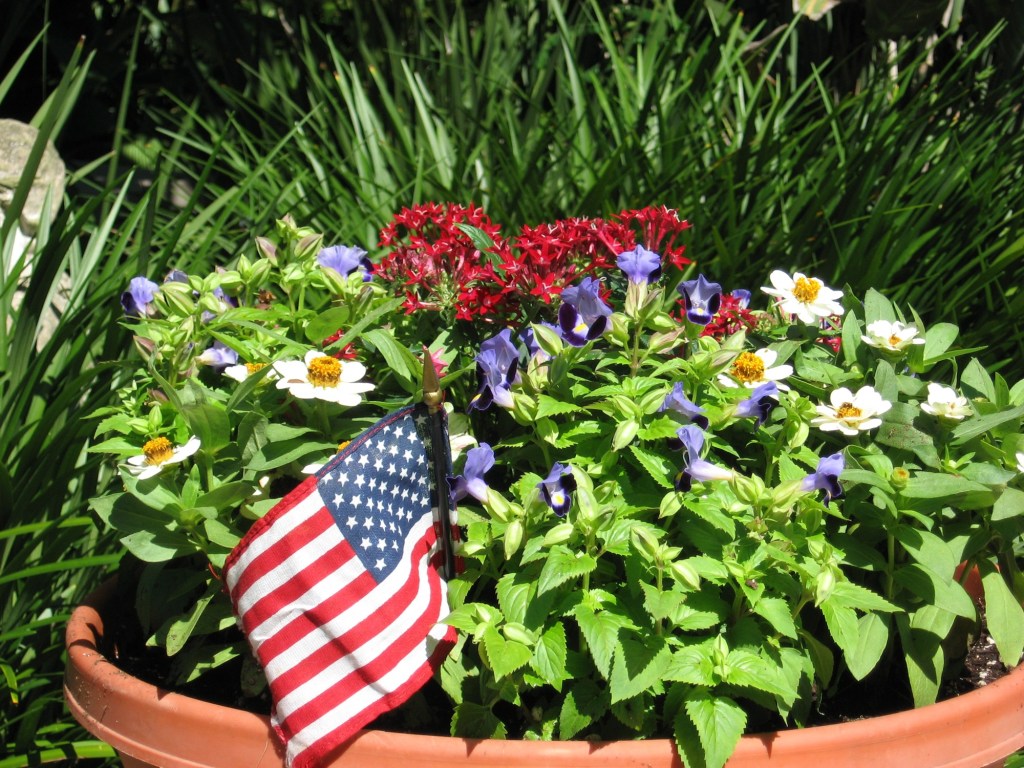
Q: I want to create a Fourth of July container garden. What can you combine to create red, white, and blue?
A: Please feel free to stop by your local garden center and join us in our 250th anniversary celebration. Patriotically colored flowers include angelonias, blue days, pentas, salvias, torenias, and zinnias. Everything can be stored relatively small in a large container. Create it now and you’ll have red, white, and blue to offer all summer long. Feed monthly with a slow-release fertilizer to maintain moisture and encourage growth and blooming.
Botany: Is it too late to add zinnias to your flower beds?
Q: I’ve read that you should wait until new growth appears on your Norfolk Island pines. Does that mean I shouldn’t cut the brown branches?
A: The pines on Norfolk Island certainly look pathetic, but there are still many of them still alive, at least in parts. Some are completely discolored and partially brown, while others have limited damage to their limbs. In more sheltered trees, branches with green needles may be seen. It is difficult to determine the full extent of chill damage until new growth begins, which can last through the summer. Even if the upper part of the trunk is dead, there are some trunks that have buds sprouting at the lower part. Brown, dead needles and branches are expected to fall from summer to fall. If a limb or part is dead, feel free to remove all or part of it. The trunks of the Norfolk Island pines observed appear to be sturdy, so even dead trees may not need to be removed in a hurry. Give it more time to leaf out and resume growth. Unfortunately, those that regrow don’t produce the most memorable Christmas tree look. You can always remove the tree if you don’t like the way it looks.
Q: I have an areca palm with a green trunk but no growth on the top. The upper part is brown, but there are buds coming out from the base. Should I wait longer, or should I remove tall stems that don’t have new growth on top?
A: Most of the Areca palms observed locally are dead at the top, but buds are sprouting from the base. There is always hope that new buds may form on the top, but this optimism is fading as the top turns more brown. These stem buds are located at the top and cannot regrow if severely damaged by cold. You can leave the trunk for another month or two, but you will likely need to remove it to allow the shoots from the base to form a new palm trunk.
Q: I planted a new Miami Supreme gardenia about a month ago. All the leaves turn yellow and the leaves often appear very droopy. It’s like I don’t have enough water. It will regain its energy after watering. Any thoughts?
A: Dig down and check the root ball. The gardenia is signaling that it cannot absorb the water it needs. Often the root ball becomes dry and difficult to rewet. If possible, build up 4 to 6 inches of soil around the edge of each root ball. Add water once or twice a day for 1 to 2 weeks. This way, water has to go down through the root ball. Once the root ball is moist again and the plant begins to grow, water it daily for a month, then every other day for another month until you resume regular watering.
Q: The leaves on my tomato plant are turning brown, but the fruit is still ripe. What should I do?
A: Brown spots, yellow leaves, and plant decline are all part of growing tomatoes during the wet summer season. If you are nearing the end of your tomato harvest, you may ignore plant decline. If you think you can continue producing tomatoes, try spraying with a fungicide designed for this crop. One natural product that works against both bacterial and fungal leaf spots is copper fungicide, which can be found at most garden centers. When applying, follow the instructions on the tomato or vegetable label. Unfortunately, other summer pests can also affect plants, including insects and viruses. This can also make it difficult to continue harvesting.

Q: I protected my container-grown pineapple from the cold, and it now has large fruit. When will it be ready to harvest?
A: Most pineapple fruits are ready to harvest when the green fruit begins to turn from light green to orange. The darker the color, the sweeter the fruit. Many protected plants bloomed in March. This time of year was traditionally flowering time in Central Florida. The fruit matures approximately 5 months later, during August. Here comes the problem. You’re not alone in wanting to harvest pineapples. Creatures in the landscape are also noticing the first signs of maturity. Just like you protected your pineapple seedlings during the winter, now is the time to protect them from critters. Perhaps you can move the container to a critter-free area or add cover from dusk until dawn, when animals are more likely to feed. If necessary, harvest the fruit a little earlier and let it ripen at home.
Are you a gardener in Central Florida? Here’s your to-do list for July
Q: I have a magnolia tree that has been in the ground for years, but it is only about 3 feet tall. How can I make it grow?
A: It will take heroic efforts to bring this tree back to life. While the tree is underground, adding more water or fertilizer is useless. Dig out a small magnolia and place it in a container. The roots probably haven’t grown much and are still in their original root ball shape. Transplant into a container a few centimeters larger than the root ball. If the roots are tightly connected, separate the outer layer. Grow the tree in a shady spot for at least a month, then gradually return it to a sunny spot. Water to keep the soil moist and apply a slow-release fertilizer to the topsoil according to container cultivation label instructions. After about a year of steady growth, it is ready to be planted in the ground again.
Tom McCubbin is an emeritus urban horticulturist for the University of Florida Cooperative Extension Service. Write to Orlando Sentinel, PO Box 2833, Orlando, FL. 32802. Email: TomMac1996@aol.com.
