


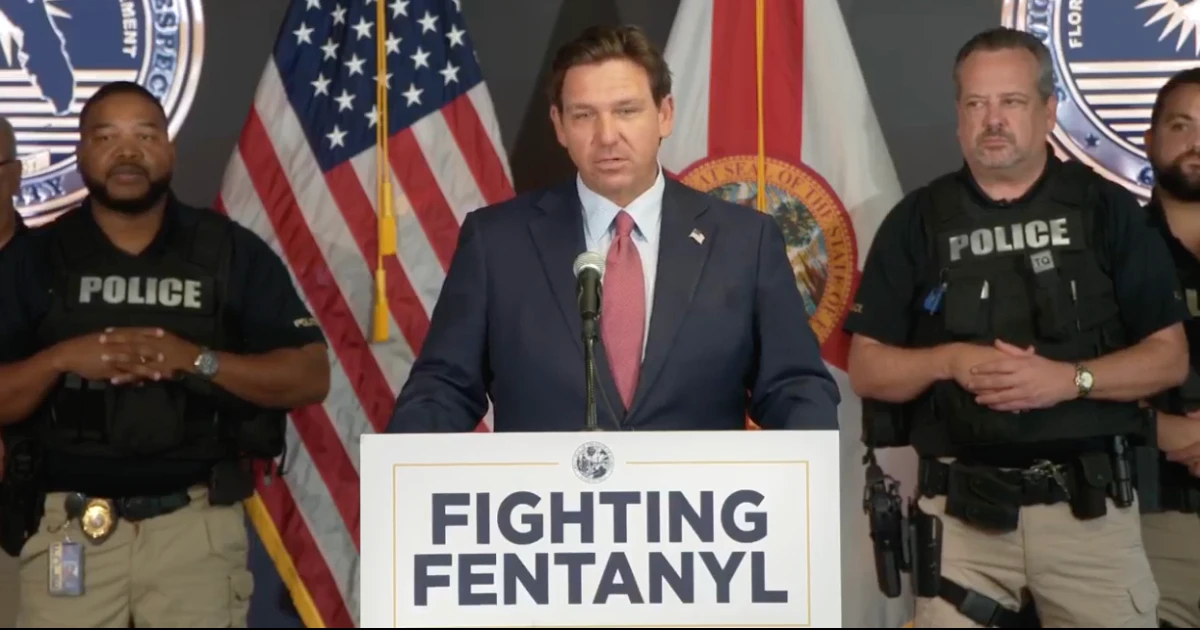
DeSantis announces decline in Florida fentanyl and opioid deaths
From Florida Daily Staff
Gov. Ron DeSantis announced that Florida saw a significant decline in fentanyl and opioid-related deaths in the first half of 2025, citing new data from the Florida Department of Law Enforcement’s Florida Board of Medical Examiners.
DeSantis, speaking in Titusville, cited the state’s enforcement policies, drug enforcement efforts and support for law enforcement as contributing factors to the decline.
Statewide drug-related deaths decreased by 19 percent from January to June 2025, according to the 2025 Preliminary Report on Drugs Identified in Deaths. Opioid deaths decreased by 42 percent and fentanyl deaths by 46 percent. The report also showed that cocaine-related deaths decreased by 24 percent and methamphetamine-related deaths by more than 31 percent.
“Florida has proven that states can successfully combat fentanyl and cartels,” DeSantis said. “Thanks to our investments and policies to empower law enforcement, drug-related deaths decreased significantly last year.”

The governor also highlighted the State Assistance Program to Eliminate Fentanyl, known as SAFE. The program was established in 2023 to provide funding to law enforcement agencies conducting large-scale drug investigations, including fentanyl trafficking and cartel-related operations.
The SAFE investigation resulted in nearly 3,000 arrests and the seizure of 600 pounds of fentanyl, more than 65,000 fentanyl pills, more than 600 pounds of cocaine, nearly 2,600 pounds of marijuana, more than 480 pounds of methamphetamine, $6.4 million in cash and more than 970 firearms, according to the governor’s office. The number of vehicles is 85.
Florida Department of Law Enforcement Director Mark Glass said the program helps strengthen drug enforcement across the state.
“Governor DeSantis’ SAFE program has had a major impact on Florida’s fight against fentanyl,” Glass said. “The SAFE program has increased law enforcement efforts, driven record levels of seizures, and disrupted criminal networks involved in trafficking deadly drugs in our communities.”
DeSantis also cited several cartel-related investigations conducted through the program, including cases in Orlando, Jacksonville, Fort Myers, South Florida, Hialeah, Pasco County, Polk County and the Florida Panhandle.
Florida Department of Highway Safety and Motor Vehicles Executive Director Dave Kerner said state troopers are being given more resources to fight drug trafficking.
“Our efforts to stop cartel-related human trafficking are driven by a commitment to preventing further loss and protecting all Floridians,” Kerner said.
The announcement also includes new funding for law enforcement and corrections personnel in the governor’s fiscal year 2026-27 proposal.
These recommendations include increasing the starting salary for correctional officers from $22 an hour to $28 an hour, providing an additional $13.5 million in raises for sworn state law enforcement officers, and allocating an additional $25 million to the Law Enforcement Officer Recruitment Bonus Program, which provides bonuses of up to $5,000 to newly hired law enforcement officers.
Florida Department of Corrections Secretary Ricky Dixon said pay is a key issue in retaining correctional officers.
“Florida is a law and order state, and competitive wages are essential to sustaining our correctional workforce if we hope to continue to keep Florida families safe,” Dixon said. “Governor DeSantis understands the challenges we face and the investments needed to protect our communities.”

