


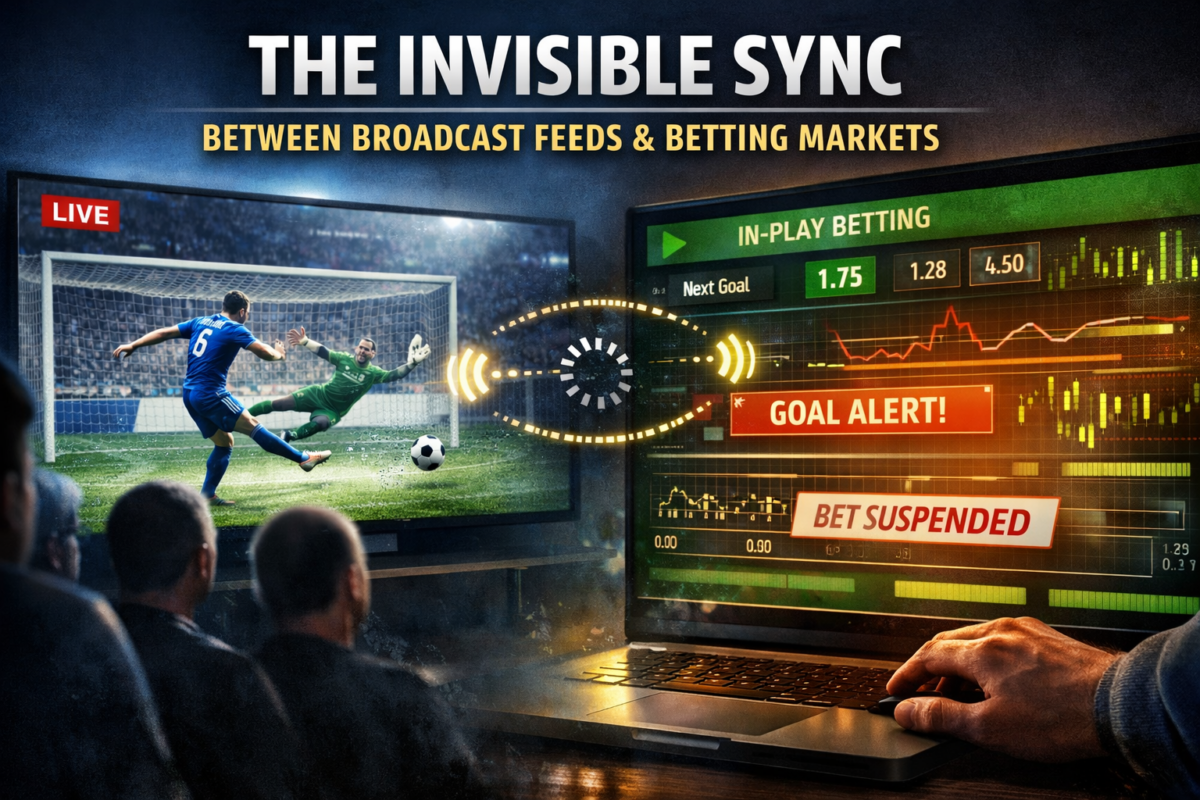
You don’t notice it right away. The game looks normal. The odds seem normal. It feels like everything is happening at the same time. But if you let it sit for a while, especially during fast matches, something starts to feel slightly off. A shot occurs. I can see it clearly. Maybe it will react to it. Then you look at the odds and notice that they have already changed. Not after that. in front. That’s a small thing. It’s easy to ignore. But it keeps happening. And once or twice you catch it, it is difficult to get rid of it.
It’s not one feed, it’s two different worlds
What you see and what the market is reacting to are not really in the same vein. Broadcasts are built to be watched. Cameras, production, replays and commentary are layered on top of that. Everything is encoded, transmitted, etc. before it appears on screen. Even with a good connection, there will always be some delay. At the same time, another flow of information is running in the background. It’s not a video. Just vivid events. The shot was recorded. A foul was called. Possession is turned over. This is the layer where most betting activity actually connects. It’s not about the photo you’re looking at, it’s about the signal being processed in real time behind the scenes. That data doesn’t have to look nice. You just need to arrive early. Therefore, take a shorter path. That’s where the gap begins.
Why I feel the market is one step ahead
Once an opportunity arises, the system does not wait for it to unfold. React to signals. Building pressure, entries into the box, sequences that statistically lead somewhere. In some cases, even before the final action occurs. So by the time the shot actually appears on screen, the adjustments have already begun. It’s not necessarily dramatic. Sometimes it’s just a slight change. But it’s enough to make you feel like you missed the moment by a second. Platforms like betway work within that flow. They’re not reacting to what you’re seeing. They are reacting to what is already registered. This difference is more important in fast games than in slow games.

Delay is not the same for everyone
This part will be overlooked. Two people watching the same game don’t always see the same seconds of the game. One person may be a few seconds behind. The other one is probably a little closer to real time. Depends on stream, device, and connection. Therefore, when looking at the odds, they do not necessarily match the version of the match that the market is using. As a result, it can sometimes feel like things are moving “too fast.” it’s not. You just don’t realize it and it’s a little late.
Sudden stoppage of the market
Just before something big happens, everything freezes. The odds disappear. The market stops. It will then adjust and come back after a few seconds. It may feel sudden when you are halfway there. But it’s not random. It’s more like the system is breathing. When a critical moment arises, whether it’s a goal chance, a penalty situation, or something unclear, the safest course of action is to pause everything. Let the data stabilize and see what actually happened, then open it again. Prevents things from getting too out of sync. Without that pause, the gap would have been even more pronounced.
Feels smooth but not perfect
From the outside, everything is fused together. Please take a look. you react. The numbers move. I feel connected. And in most cases it’s close enough. But underneath, two timelines are running in parallel. One is visual and the other is data-driven. They overlap most of the time, but not completely. That small difference is where many “almost” moments come from. A bet I thought I had time for. Odds that changed just before you clicked. It could look better on screen than what’s already on the market. Nothing dramatic. It’s just a little off. And that’s really all there is to it. Not broken. It’s not unfair. It’s just not completely in sync.

