


The story of how Mexican sculptor Jacobo Alonso came to exhibit in Maitland began when he was a young man working on computer systems at Volkswagen.
He had about 15 suits and found himself surrounded by colleagues who were married with children and were saving for their children’s college tuition. Something went wrong.
“Men go through a midlife crisis at 40, but I went through it at 26,” Alonso said. “I thought I shouldn’t be here.”
Since his early midlife crisis, Alonso has found a career as an artist, and his work is currently on display in a new exhibition at the Maitland Art and History Museum. “The Sowned Body: Recconfiguring the Symbolic” will open with a reception on Friday, showcasing the artist’s 2D and 3D works together for the first time.
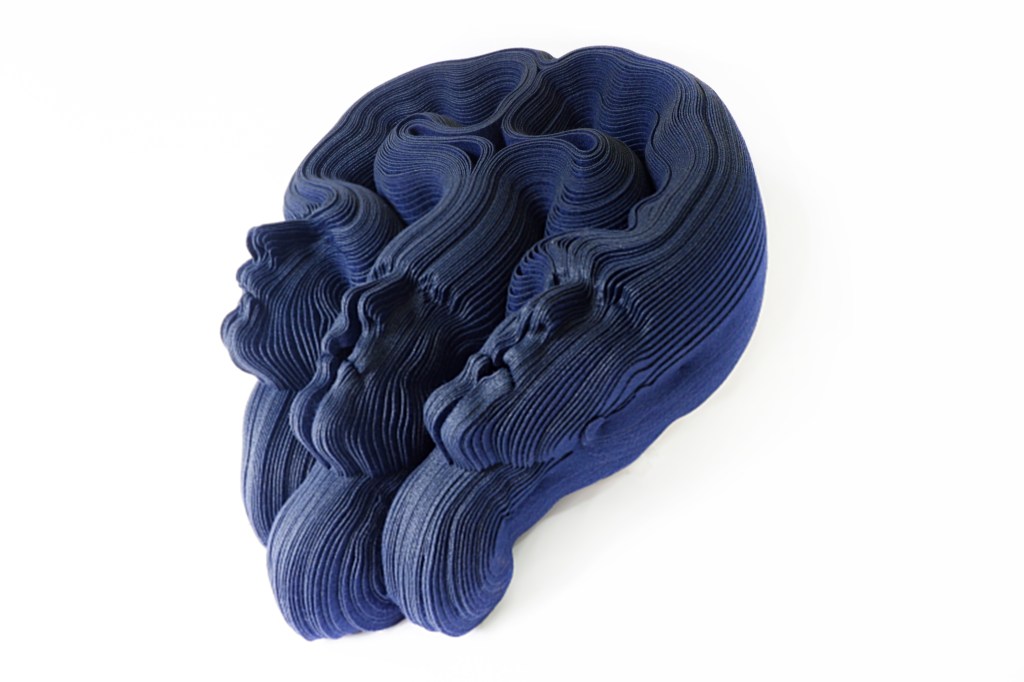
The exhibition features a variety of physical expressions using smoke soot paintings and felt sculptures, utilizing one of the world’s oldest known textiles.
These works were born out of my continued questioning of my identity and place while attending art school after a short career in computer science.

“In art school, I started questioning, ‘What am I doing here?’ It was a different kind of crisis, like, ‘Why did I study art?'” he said. “I saw my image of myself changing, so I started questioning my body and started drawing pictures about my body.”
His work is inspired by pre-Columbian traditions and Mayan Revival architecture, which he was surrounded by during his residency at Maitland Art Center.
This exhibition comes full circle in that it showcases the work of the man who lived and worked in Maitland, but also reflects the interests of Andre Smith. Andre Smith was interested in Latin America and incorporated its influences into the design of the Maitland Art Center, which he founded in 1937.

Today, his work draws on creative processes that can be traced back centuries or even millennia, while also incorporating modern technology.
“Jacobo’s work is a truly beautiful fusion of the use of felt and old textiles, and the use of 3D mapping on a computer to cut out layers of felt,” said Dan Hess, chief curator at the museum. “Then he goes back and stitches all these layers together by hand. In the end, what’s revealed in it is the hand.”
The body is clearly visible in the three-dimensional works made of layers of felt, but it can also be seen in Hummage’s paintings with soot in the shape of fingers, toes, and torsos.

“At a previous show, a little boy looked at my paper work and saw one of the fingers on my hand,” Alonso said. “He said, ‘This is a corpse. This is awful.'” One of his friends said, “We’re bodies, dude.” I was just listening. ”
One of the main pieces in the show is a piece constructed with felt, where individual body parts are joined together with layers of felt to create a larger shape.
“I’ve been sewing the body together. There’s a thumb and a finger, but they’re made of seven layers, and I sew them together to make the hand. The volume of the sculpture gets bigger and bigger,” Alonso said. “For me, Scient Body is about helping people recognize their bodies.”
Find @PConnPie on Instagram or email pconnolly@orlandosentinel.com. Stay up to date on travel, arts and events by subscribing to our newsletter at orlandosentinel.com/newsletters.

If you go
“The Stivated Body” opens with a free reception at 231 W. Packwood Ave. in Maitland on Jan. 23 from 6:30 to 9 p.m. The opening event will include music by DJ Spreadsheets, food from La Patrona Tacos & Birria House, and a cash bar. This exhibit is on display until April 5th. Admission is $6 for general admission per day and $5 for seniors and children ages 5-17. Children under 5, college students (UCF, Valencia State, and Seminole State only), military, veterans, and Maitland residents all have free admission. More information: artandhistory.org
