


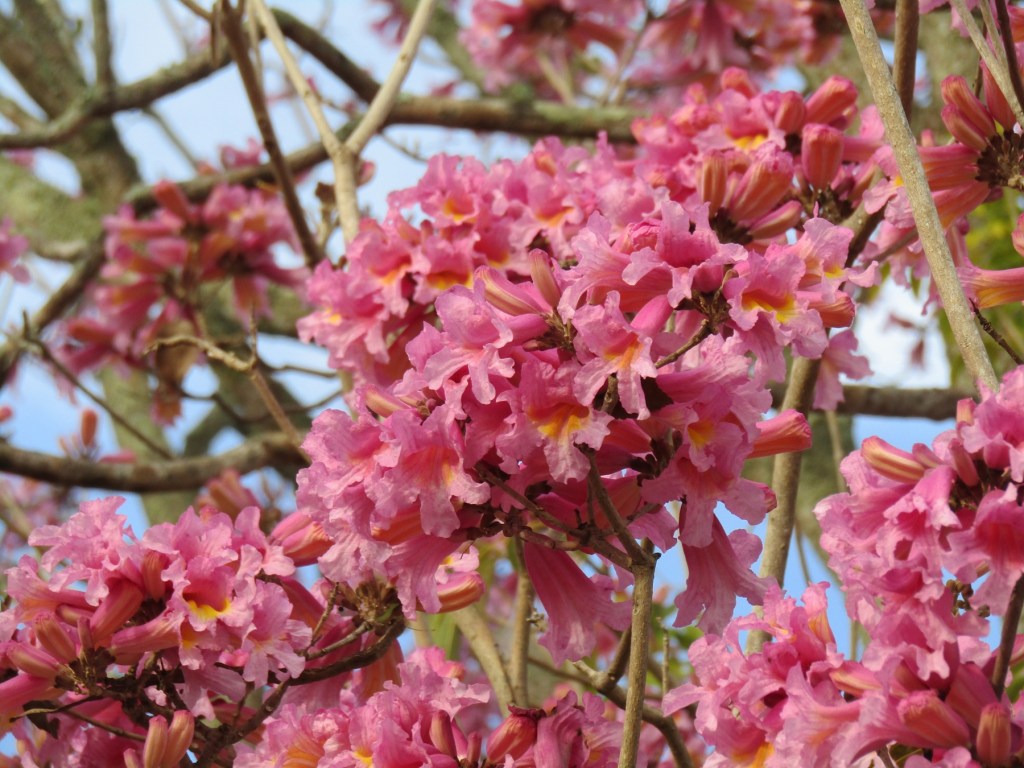
Question: There is a tree in my local landscape that has pink flowers. What is that tree? Is it a reliable tree for your home site?
Answer: The pink Tabebuia trees bloom in winter, making the neighborhood even more attractive. Together with its late-blooming relative, yellow tabebuia, it brightens the landscape from the cool months to spring. Both grow relatively small trees that are frost and freeze tolerant. The Tabebuia tree can be used as an accent or shade tree to add a tropical feel to your local landscape. When the flowers bloom, the area beneath them will be covered with colorful flowers. Some people may find it a little troublesome. Unfortunately, Tabebuia trees have shallow roots and can be affected during severe storms. Due to its extensive surface root system, it is best placed away from sidewalks and driveways.
Q. I see lavender being sold at a local nursery. Is it possible to grow plants in central Florida?
A. Enjoy lavender in the Central Florida landscape during winter and spring. The plant usually prefers a cool climate, but varieties that can tolerate some heat are now available. Summer is a tough season for lavender. Hot and humid climates often cause plant decline. Lavender is best thought of as a short-lived perennial. Lavender prefers moist soil, but not too wet. Water when the surface is dry. Please place it in a sunny place from late autumn to spring. During the summer, a sunny location in the morning and light shade in the afternoon is best. Feed the plants with a slow-release fertilizer as recommended on the label during the growing season. Plants can be grown underground by placing a light mulch on the soil surface. Container cultivation may be best as you can move the plants to better growing conditions during the hot rainy season.

Q. If you grow parsley from seeds, it will take time for them to germinate. Is there a way to start growing faster?
A. Parsley is a seed that germinates slowly no matter what you do. It usually takes two to three weeks for the first buds to appear. Reports suggest that slow germination is due to a natural coating that inhibits seed growth. It has been suggested that soaking seeds in warm water for 24 hours may wash away the coating and promote growth. Try this, or do what others have done and wait a few weeks after sowing for the first seedlings to appear.
Q. There is a brown patch of grass on my lawn. What causes it to decline and how can it recover?
A. Brown spots are common, but are probably not caused by insects or disease. Weather conditions have reduced the incidence of these common lawn problems. As you drive through your local neighborhood, the most common brown spots you’ll notice are patches of dying weeds. Specks of tropical signalgrass, basketgrass, and crabgrass are common, but usually decline during the cooler months. Unfortunately, this winter has been so mild that some of these weeds have only turned brown and have not completely died down yet. Perhaps nature is helping residents decide where extensive lawn care is needed. If these areas are not replaced with the desired lawn, they will be filled with the same weeds. Now is a good time to prepare affected areas of your lawn for planting new grass. Cut out any weedy areas, lightly till the area, and then lay new turf from mid-February to March.
Botany: Be a little patient with impatiens during the cooler months.
Q. I put in 15 pallets of St. Augustine grass about a month ago and I water it every morning. When and what kind of fertilizer should I use?
A. Normally, the first time to fertilize is 3 to 4 weeks after installing a new lawn, but due to the winter season and limited growth, fertilizing may be delayed. As long as your lawn is a good green color, postpone spraying until late February or early March. You can then apply a slow-release lawn fertilizer according to the label instructions. Also, after your new lawn has grown for a few weeks, watering should be reduced to once or twice a week during this time. Overwatering can cause lawn decline.
Q. I planted tomato seeds over a week ago, but they haven’t germinated. Should I re-sow the seeds?
A. Fresh tomato seeds will germinate within a week under warm growing conditions. Starting in a cool location or using old seeds can affect germination. If the location is too cold or the soil is too wet, the seeds may rot as they begin to germinate. Older seeds may germinate more slowly or not grow at all. Dig up the soil where you planted the seeds to find the seeds and see if they are still viable. If the seeds do not grow after two weeks, start again with fresh seeds in a warm place.
Q. Some azaleas are starting to bloom. Is the plant sensitive to cold weather? Can it grow on the west side of the house?
A. Azaleas tolerate cold, but frost and freeze can damage their flowers. There are usually lots of firm buds at this time of year, but these buds are cold hardy and will open when the weather warms up again. Avoid exposure to the west, where the sun is stronger and hotter during the summer. Typically, rhododendrons in these areas turn yellow-green and often decline. Plants grow and bloom best in full sun or in areas with morning and afternoon shade. Also, avoid areas with deep shade where the plant will have difficulty blooming even if it grows.
Tom McCubbin is an emeritus urban horticulturist for the University of Florida Cooperative Extension Service. Write to Orlando Sentinel, PO Box 2833, Orlando, FL. 32802. Email: TomMac1996@aol.com.
