


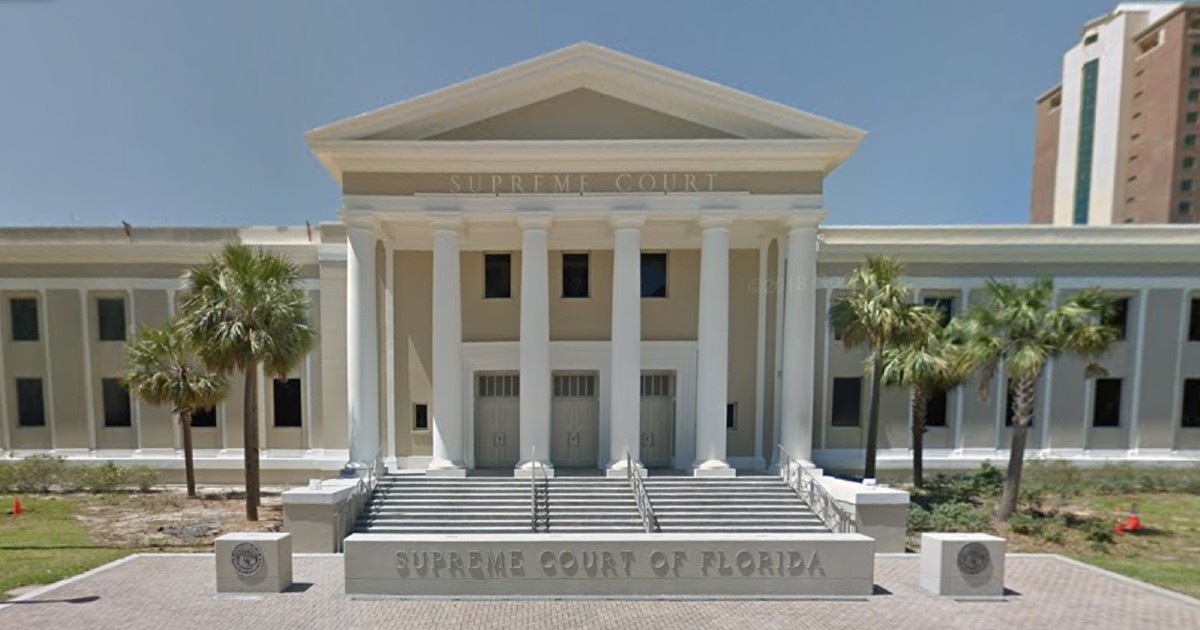
Trump v. Slaughter tests whether unelected or elected officials run the federal government.
A Supreme Court case in which a president fires a federal agency chief may sound like the Washington of baseball. But Trump v. Slaughter, now before the high court, raises a fundamental question: Who governs, the people’s elected officials, or an entrenched bureaucracy?
At issue in the case is whether the president can remove the leadership of so-called independent agencies. This issue may seem narrow and uninteresting, but it is far from the case. In fact, this case touches on two fundamental constitutional issues. The question is whether an elected president actually has the authority to enforce the laws passed by Congress, and whether the American people are allowed to choose and control their government officials.
Most federal laws that affect Americans are not actually laws passed by an elected Congress. Instead, they are rules created by unelected institutions. Government agencies regulate everything from what companies can sell to what doctors can prescribe to the technology we can build. Officials have enormous influence over daily life and remain almost completely isolated from the ballot box.
In Trump v. Slaughter, President Donald Trump removed Rebecca Slaughter from her post as Commissioner of the Federal Trade Commission. The FTC Act allows removal only for “cause,” i.e., inefficiency, dereliction of duty, or fraud, not policy conflicts. Committee members usually have a fixed term of office unless they commit serious misconduct. Despite this, President Trump fired Slaughter, saying his continued service would be inconsistent with his administration’s priorities.

The government maintains that the constitution is clear and that executive power rests with the president and not with unelected officials. According to the government, Article 2 of the constitution means a sitting president can hire and fire people working in the executive branch. After all, how can a president “execute” if those who work for him don’t have to follow his instructions?
Supporters of an independent agency worry that the president would gain too much power. Justice Elena Kagan expressed this concern during oral arguments, warning that arbitrary removal of the president could combine executive, rulemaking, and judicial powers into one office. That’s not an unwarranted concern. But it is the result of Congressional delegations and courts that have turned a blind eye to separation of powers violations for decades.
During oral argument, Justice Sonia Sotomayor pushed back, questioning whether today’s courts should reconsider decisions handed down in the 1930s. Her concern is that allowing unlimited removal of the president would “destroy the structure of government” and remove Congress’ ability to insulate government agencies from presidential control. Sotomayor sees no constitutional problem with Congress infringing on executive branch power or giving money to government agencies, as long as Congress determines the arrangement is “better structured.”
None of this logic is convincing. Indeed, that overlooks a fundamental reality. If Congress can delegate legislative responsibility to agencies and prevent the president from directing those agencies, then elected officials cannot be truly accountable for the rules that govern the people. It overturns the Constitution.

Justice Neil Gorsuch appears.
During oral argument, Gorsuch pointed to the real problem: Congress has delegated too much legislative power to federal agencies, and the courts have recognized that. He suggested that it may be time to once again impose substantive limits on delegation, noting the court’s reliance on what he called “increasingly tenuous” straightforward principles.
bingo.
Mr. Gorsuch’s point is one that liberals and conservatives should agree on. If left unchecked, the federal bureaucracy will take power away from the people. And Congress must not be allowed to delegate excessive powers to the executive branch simply because it deems it expedient. Courts must enforce the Constitution’s separation of powers.
If Congress is going to create government agencies and authorize them to make policy, it should be clear and limited in what powers it gives those agencies, since the Constitution declares that the president is responsible for enforcing the laws.
Returning to the main theme, this all has to do with how governments interact with people. On the one hand, we maintain the status quo, with a large unelected bureaucracy that limits the power of an elected president to enforce the law. This in turn limits the people’s control over the government.
On the other hand, the court could return to the constitutional principle (actually recognized before the late 1930s) that the president has the constitutional power to enforce the law and remove officials who do not comply with his orders, and that the court polices the boundaries of Congressional delegation to government agencies.
Let the President do what Article II envisions. Let Congress (not the government agencies) enact the laws that Article 1 envisions. And let people choose and govern them all.
Ryan Owens is director of the Governance and Civics Institute and professor of political science at Florida State University. He specializes in the U.S. Supreme Court, federal courts of appeals, and judicial conduct.

