


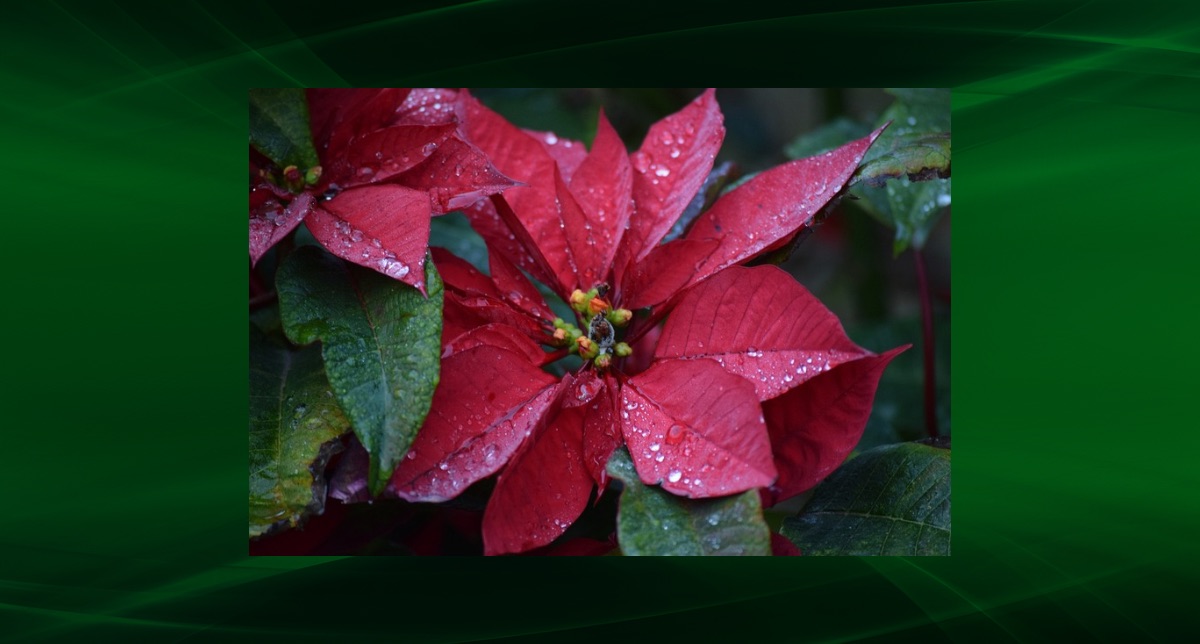
Poinsettia, known for its bright red and green leaves, is affectionately known as the “Christmas flower” and is a symbolic plant of Christmas. This tradition is rooted in both cultural and botanical origins, stemming from the plant’s history in Mexico and its introduction to the United States.
Native to Mexico and Central America, poinsettias were originally called cuetlaxochitl by the Aztecs, who used them for medicinal purposes and as a dye. The bright red leaves, or bracts, are associated with purity and became prominent in religious ceremonies. In the 16th century, Mexican legends associated this plant with Christmas. According to the story, a poor child, unable to give a gift to the Christ Child, gave him a modest bouquet of weeds. Miraculously, the weeds transformed into bright red poinsettias symbolizing the spirit of giving and humility.
The plant’s association with Christmas became widely known through Joel Roberts Poinsett, the first U.S. ambassador to Mexico and an amateur botanist. In 1828, Poinsett introduced the plant to the United States by bringing cuttings to his home in South Carolina. This plant was later named “Poinsettia” after him.
By the 20th century, poinsettias were popular as holiday decorations, thanks in part to the marketing efforts of California’s Ecke family, who perfected the methods of growing and distributing the plant. Red and green colors naturally complement traditional Christmas decorations and establish themselves as holiday staples.
Today, poinsettias are sold around the world during the holiday season and symbolize joy, hope, and the spirit of Christmas. Its connection to festive traditions and its timeless beauty have made it a beloved part of holiday celebrations across cultures.


