


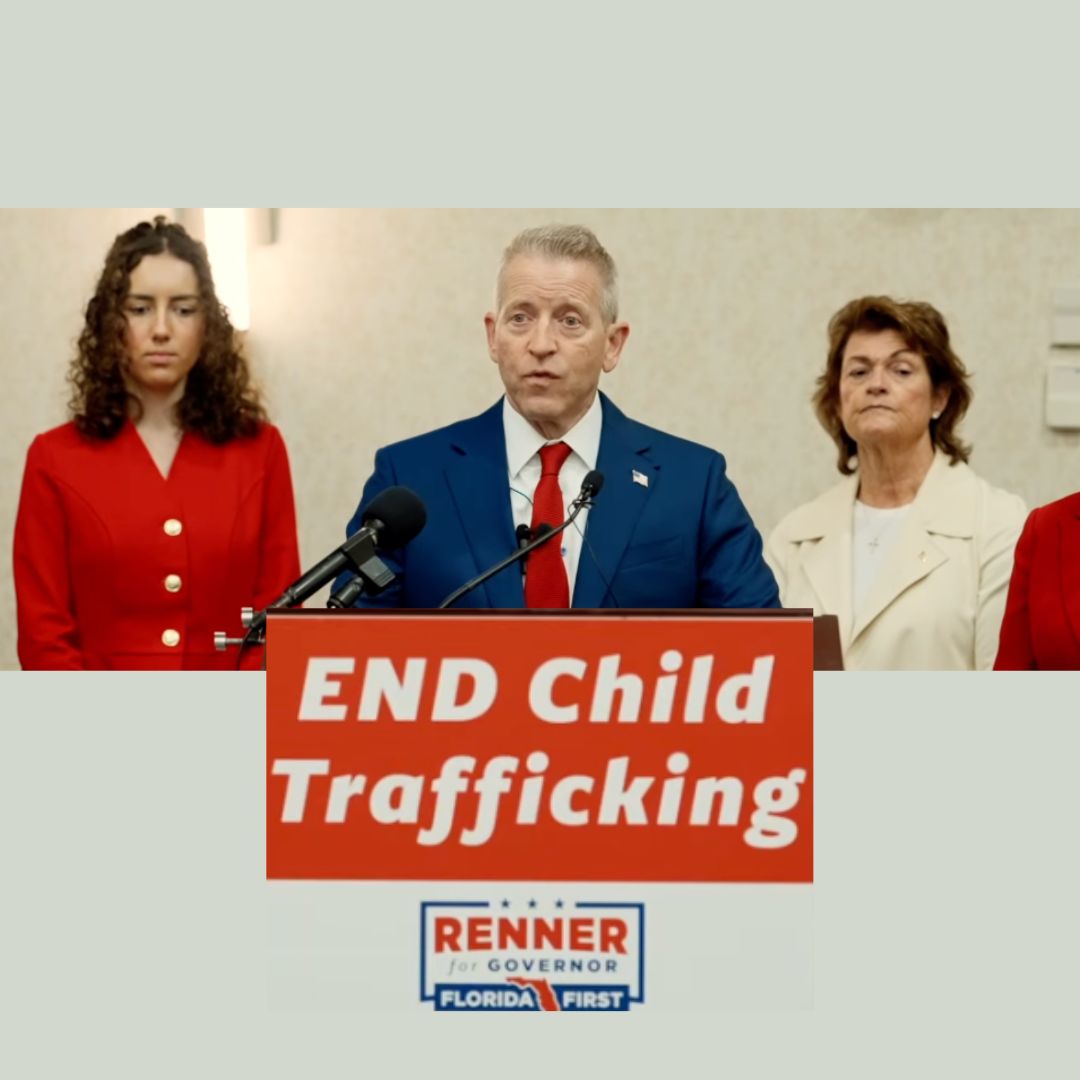
TAMPA, Fla. – Today in Tampa, Fla., gubernatorial candidate Paul Renner held a press conference to outline another key element of his Florida First public safety policy: combating child sex trafficking.
Declaring that “good is not good enough when it comes to protecting children,” Florida’s first public safety proposal to end child sex trafficking outlines a bold, comprehensive plan to tackle human trafficking and end the sexual exploitation of children and women across the state.
Paul Renner said, “For too long, responsibility for human trafficking has been shared among many different agencies and councils. They have done a good job, but when responsibility is spread out, it can discredit victims. Human trafficking is one of the most pervasive crimes in the world. As governor and as the head of our state’s law enforcement agencies, I need to remember that all human traffickers and cartels will not stop until they are on death row or in prison in Florida.”
Florida ranks third in the nation, highlighting the importance of policy actions aimed at strengthening public safety enforcement, protecting vulnerable individuals and seeking justice, and ensuring traffickers face serious consequences under the law.
“Child exploitation and human trafficking are a scourge on our state and nation that must be eradicated,” said Mary Flynn O’Neill, executive director of America’s Future. “Paul Renner has a clear plan to eradicate this criminal activity, and he has the courage to enforce the law and the determination to see it through.”

Renner’s first public safety proposal for Florida to end child sex trafficking calls for the creation of a Florida Human Trafficking Enforcement Agency, housed directly within the governor’s office and reporting to the governor.
Other key elements of Florida’s first public safety proposal to combat child sex trafficking include:
1. Stronger laws to punish and stop child sex trafficking
787.06(5)(a), which expands the definition of capital sex trafficking to include minors (currently under 12 years of age). This means the death penalty for sex trafficked children. 827.071(2) and (3) to be part of the Trafficking in Persons Act 787.06 with enhanced penalties. For example: Traffickers obtain embarrassing photos from children and use blackmail to coerce children into long-term participation. Currently, they are not treated as human traffickers or punished.
2. Increased funding for the Internet Crimes Against Children (ICAC) Task Force
Addressing the backlog of dangerous cyber information while children are being actively exploited. Support SB 656 (Bradley)/HB 709 (Carhart-Johnson) to create a dedicated ICAC task force funding program with regular resources to identify, prosecute, and dismantle human trafficking operations.
3. Strengthening collaboration between task forces and nonprofit organizations
Encourage closer collaboration between Florida’s three regional human trafficking task forces and nongovernmental organizations to expand education, information sharing, and disruption efforts.
4. Expanding support for victims
Increase funding for emergency shelter, trauma care, and long-term recovery resources for all victims of sex trafficking.
5. Strong immigration enforcement
Strengthen collaboration with the Department of Homeland Security to apprehend and remove illegal immigrants involved in human trafficking and related crimes.
6. Strengthening online protection for minors
Aggressively enforce new laws that protect children from online pornography and addictive social media platforms, including HB 3.
7. No phones in K-12 schools—“bell-to-bell”
To reduce exploitation, distraction, and online predation during school hours, keep cell phones out of K-12 classrooms from the first bell to the last bell.
Florida’s first public safety proposal to end child sex trafficking makes clear that child protection is not optional, gradual, or negotiable, but a moral obligation and a top priority.
Republican Paul Renner paid the governor.

