


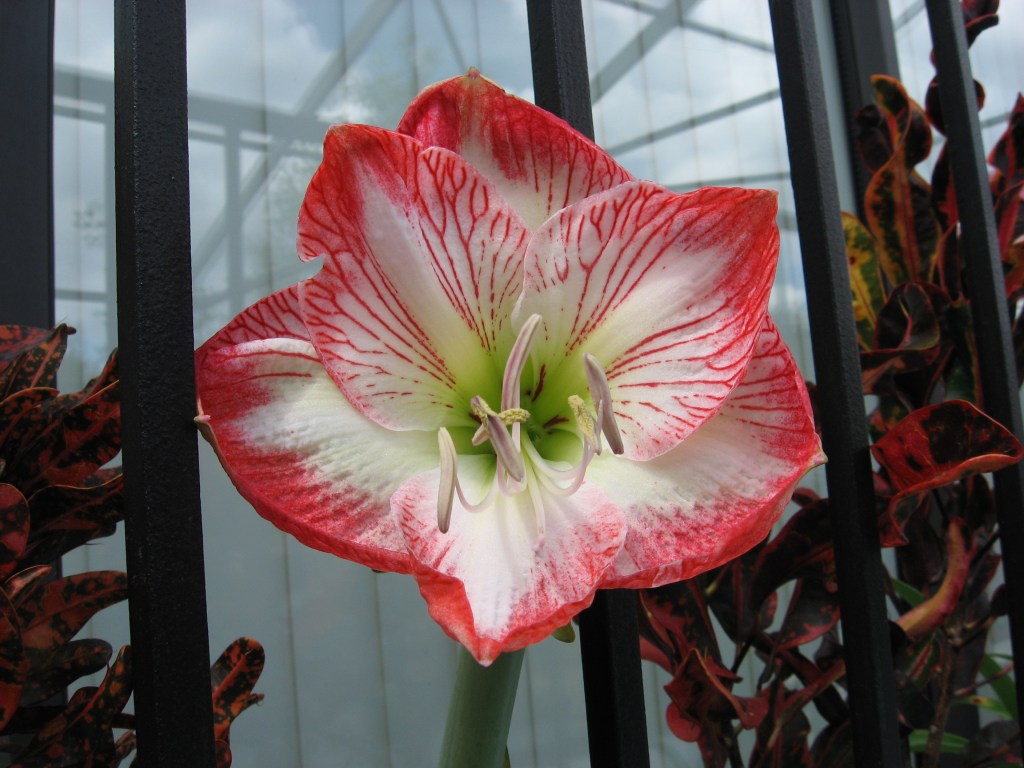
Question: I am forcing my amaryllis bulbs to bloom. I would like to give it as a gift, but how long will it take for it to bloom?
Answer: It takes at least six weeks after you plant the bulbs for the buds to grow and some flowers to open. Store the bulb in a warm, bright place, moist and away from direct sunlight. Bulbs are fun to grow, but the flower stalks can be a little droopy depending on light levels. Here’s another idea. Start planting bulbs in decorative containers so that the buds grow several inches tall. You can then give the bulbs as a gift and the recipient can enjoy watching the bulbs continue to grow into flowering plants, securing the flower stalks to a support if desired.
Q. My Valencia orange tree, which I have been using for juice for over 20 years, suddenly started producing lemon-flavored fruit. what happened?

A. Citrus trees usually have a dual personality. One is very nice and sweet, and the other is unpleasant or slightly sour. The main variety that I want to grow and harvest is sweet and delicious. But what many gardeners don’t realize is that there is a second type of sour fruit above or below ground. Citrus trees are often grafted. This often consists of a rootstock, such as sour lemon, on which the desired variety is placed and the desired tree is grown. Sometimes the root stock also sprouts, which becomes one of the fruiting trunks. We get to the bottom of this problem by tracing the lemon-producing branches from the branch to the trunk and then closer to or below the ground. They are definitely attached to the original rootstock. Unless this is your only source of fruit, you can remove these sour tree parts to allow your desired variety to continue growing and yielding Valencia oranges.
Q. My young magnolia tree that I am growing in a container has black spots on its leaves. What is this? Can it be controlled?
A. There’s a saying: Out, out, hell of a spot. However, the spots shown in the email photo are permanent areas affected by the fungus on the leaf and will not go away until the leaf dies. Applying a copper fungicide according to label instructions can prevent further spot formation. Make the first application and then continue monthly as needed to protect future foliage. Your photo also showed the magnolia leaves showing some yellowing. This suggests that container plantings require fertilizer. Nutrient deficiencies make trees and leaves more susceptible to disease. Choose a slow-release fertilizer applied occasionally in March. Then continue using as recommended on the product label for container plantings.
Plant Doctor: A little neglect can cause bougainvillea to bloom.
Q. My old feijoas are too large for the footprint of my landscape. When is the best time to prune so as not to affect next year’s blooms?
A. Some people may know feijoa as pineapple guava. This shrub is late flowering and fruiting and is often trimmed into tree form. Some say the ripe fruit has pulp inside and tastes like a pineapple-guava blend. It will be ready to eat in the fall. For large shrubs and trees, only minimal pruning is recommended. Pruning frequently will keep it young and delay fruiting. If pruning is necessary, do it in late winter and before spring growth begins to produce fruiting flowers.
Q. I recently moved and would like to plant some trees. When is the best time to plant a new tree?
A. Don’t delay planting new plants at all. Cooler times of the year are always best. There will be less stress on you and the trees, and new plantings won’t require as much care. Be sure to use proper planting techniques, including daily watering for the first few weeks. Then, during cool weather, especially for dormant trees, watering can be reduced to the amount needed to keep the root ball and surrounding soil moist. Typically, watering can eventually be reduced to every 2-3 days during the winter. Even if the tree doesn’t grow to the top, the roots are still growing. This will prepare it to produce new buds and leaves in the spring. Initial feeding can be done using a slow-release landscape fertilizer in the spring when new growth is identified.
Q. There are black spots on the leaves of my azalea. Is this normal?
A. Leaf spot, which eventually causes defoliation on azaleas, is normal but undesirable. Most brown to black spots on leaves are caused by a fungus called Cercospora. It is too late in the season to have much control over the fungus. The plant will weaken as the leaves fall, but it should bloom and produce new buds for spring. Plants affected by Cercospora may receive an end-of-season fungicide application at this time, and applications may be resumed monthly from the beginning of the rainy season until early fall. The fungicide Daconil and some newer systemic fungicides provide good control when used according to label directions for summer and early fall prevention.
Q. I have a tall dragon fruit plant that has sprouts coming out of the sides and another coming out the top. Should I leave the side buds or cut them off?
A. Traditionally, one or more stems of the dragon fruit plant, also known as pitaya or night-blooming cereus, are stretched on a post or trellis and left to sprout new shoots at the top. These buds then bloom and support large, strange-looking fruits. This is probably done to facilitate commercial production and picking, as the plant has thorns. It is questionable whether leaving side buds will affect fruit production or quality. The only buds that need to be removed are those close to the ground where the flowers and fruit touch the soil.
Tom McCubbin is an emeritus urban horticulturist for the University of Florida Cooperative Extension Service. Write to Orlando Sentinel, PO Box 2833, Orlando, FL. 32802. Email: TomMac1996@aol.com.
Central Florida gardens in December
