


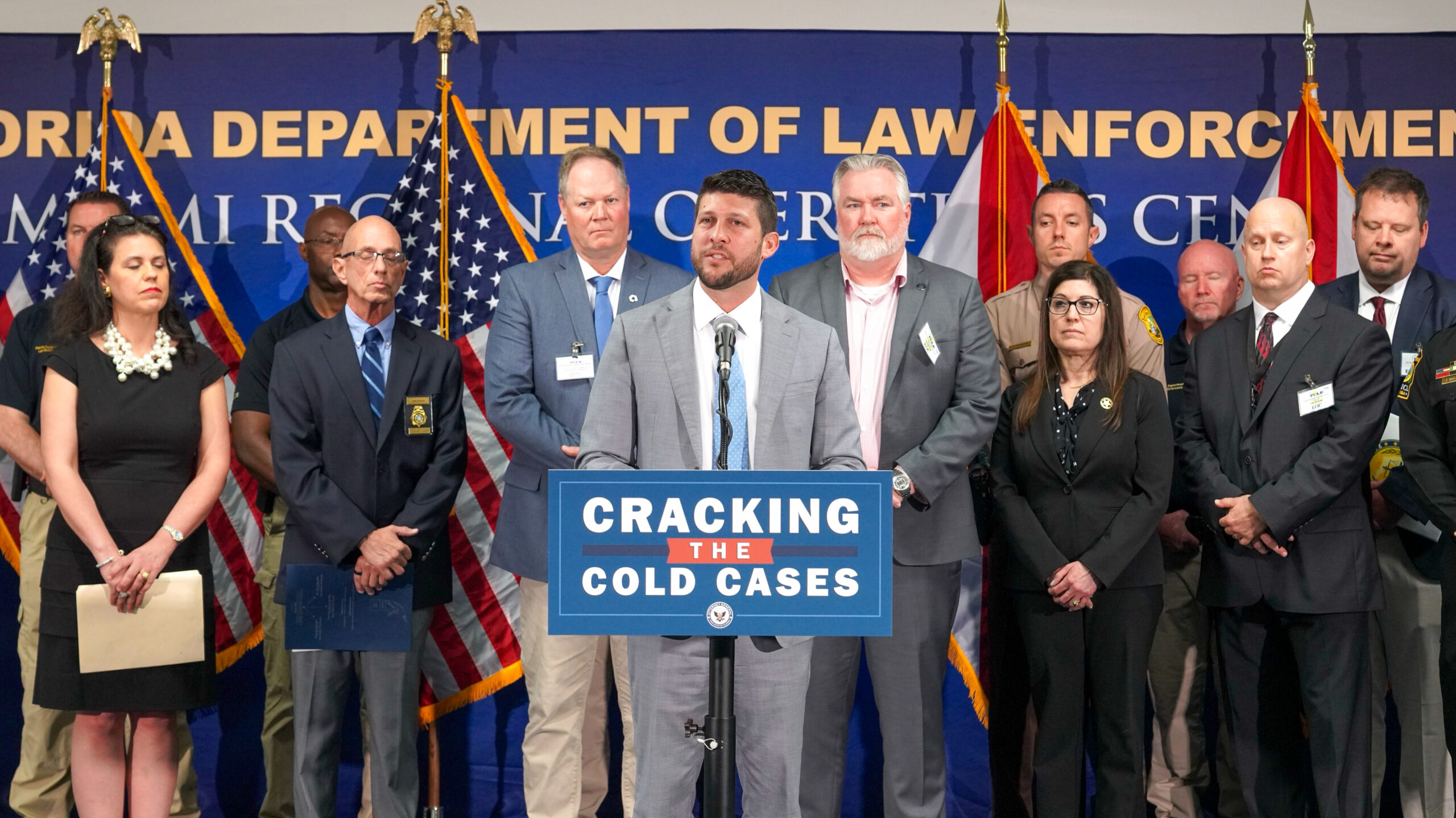
TALLAHASSEE, Fla. — Florida Attorney General James Usmeyer announced a new statewide initiative aimed at leveraging advanced forensic DNA testing and genetic genealogy to help law enforcement solve cold cases.
The program is led by the State Attorney’s Office and is a partnership with Osram, a company that specializes in human identification using cutting-edge DNA analysis. This initiative aims to proactively identify cases across Florida that could potentially be solved using existing biological evidence.
“For too long, many victims and their families have been left without answers,” Usmayer said in a statement, adding that the partnership strengthens efforts to bring closure to families who have waited years for justice.
State Sen. Ana Maria Rodriguez said the initiative is a meaningful step toward accountability. “We owe it to every victim, every family, every community to pursue the truth, no matter how long it takes,” Rodriguez said.
Officials with the Florida Department of Law Enforcement emphasized that advances in forensic science are opening new doors in investigations that have stalled for years. Special Agent in Charge John Vecchio said investigators remain committed to combing through all leads in search of answers.

Osram founder David Mittelman pointed out that many cold cases go unsolved not because of a lack of evidence, but because early technology was unable to fully analyze the available DNA. By combining traditional databases such as CODIS with modern genetic genealogy tools, investigators can now generate leads even in the absence of existing suspects or matches.
The effort will initially focus on three multi-jurisdictional homicide investigations, including:
1970s murders related to Broward and Miami-Dade counties Late 2000s double murders in the Miami Gardens area Early 1980s murders in central Florida
Details are limited because the investigation is ongoing, but officials say the goal is to use technology that was not available at the time of the crime to provide local authorities with new leads.
There are currently more than 21,000 unsolved murders in Florida, including nearly 900 cases involving unidentified bodies. Officials believe advanced DNA analysis and forensic genetic genealogy could play a key role in solving many of them.
Unlike traditional cold case efforts that rely on individual case submissions, this new effort is designed to be proactive on a statewide scale to identify cases where biological evidence may still yield answers.
The partnership is expected to expand beyond homicide cases to include serial sexual assault investigations, further enhancing Florida’s ability to pursue justice for victims of violent crimes.

