


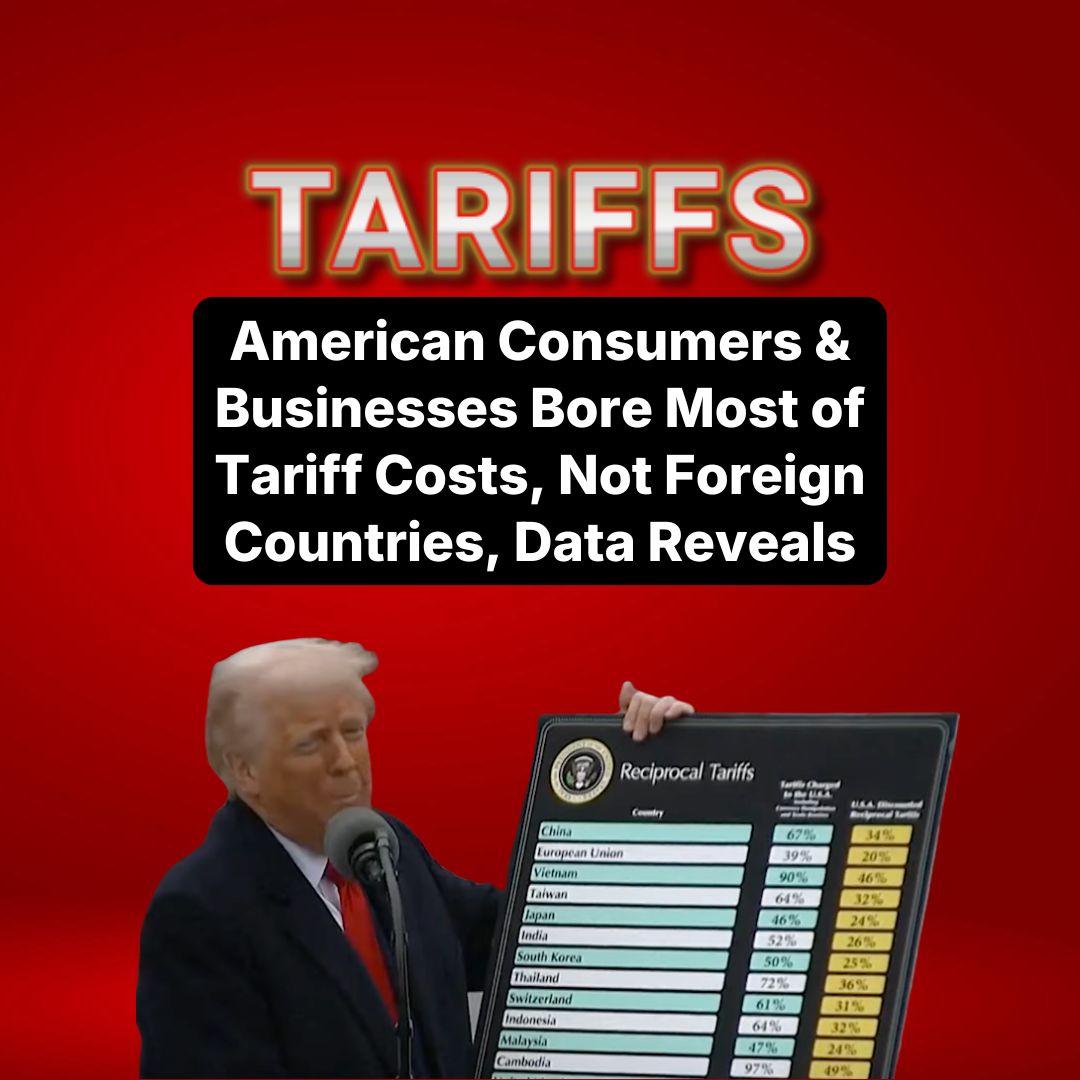
A new economic data report reveals that American consumers and businesses are bearing the overwhelming share of the costs associated with U.S. tariffs imposed in 2025, challenging President Trump’s claim that foreign exporters are primarily paying the burden.
The average U.S. tariff on imported goods will rise to about 13% in 2025, a significant increase from less than 3% previously, according to the report. The researchers concluded that nearly 90% of the total economic burden of these tariffs ultimately falls on U.S. businesses and households, rather than foreign producers.

The survey results show that U.S. importers absorbed about 94% of tariff costs from January to August. Although the burden on exporters was slightly heavier in the second half of the year, most of the impact was still borne by Americans, accounting for about 92% in September and October and about 86% in November. Additional federal analyzes cited similar conclusions, noting that higher tariffs tend to raise the cost of imported goods, which in turn tends to raise the prices paid by U.S. consumers and businesses.
The New York Fed estimates that in the short term, businesses will likely absorb about 30% of tariff-related import price increases through lower profit margins, with the remaining 70% typically passed on to consumers through higher retail prices. Overall, the report concludes that domestic businesses and households continue to bear most of the fiscal burden caused by increased tariff levels.


