


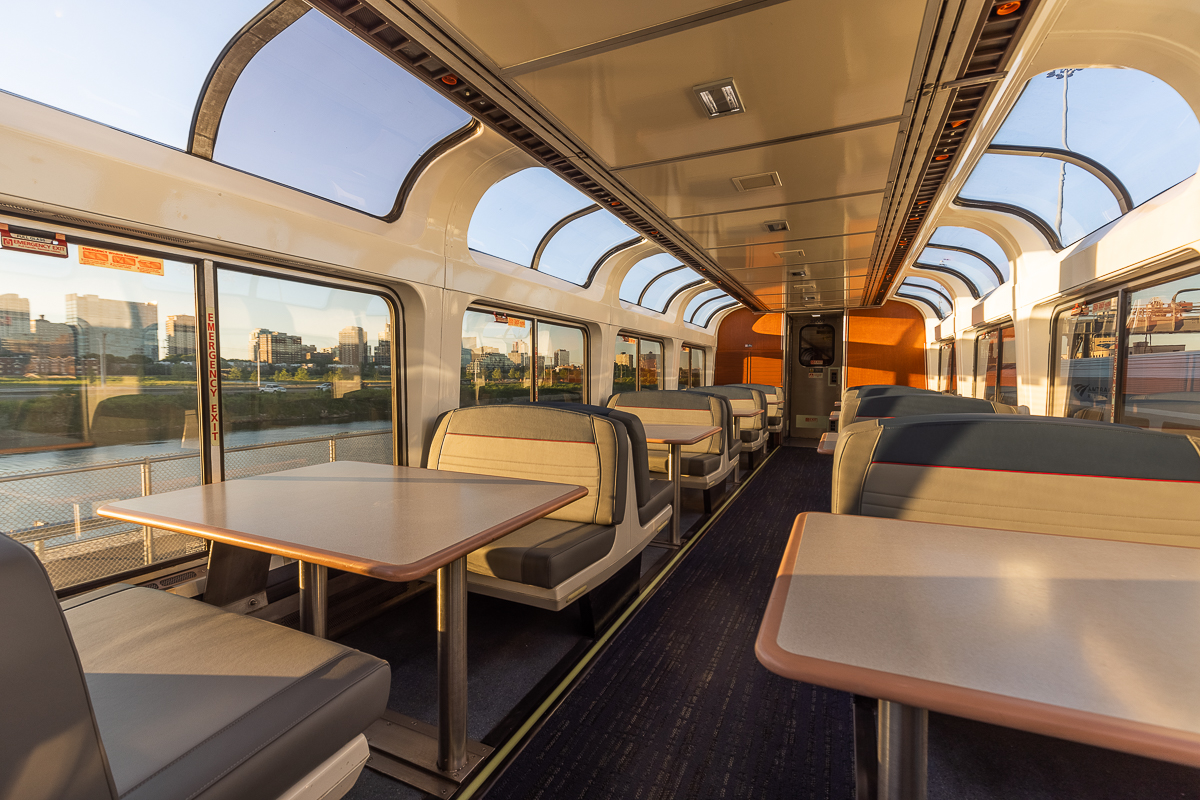
Florida’s economy is built on infrastructure. Roads, ports, and airports: these are the arteries of commerce, and smart business leaders know that a nation’s competitiveness is only as strong as its ability to move people, workers, and goods efficiently. That’s why I’m an advocate for passenger rail here in Florida. Railroads are a great asset that Florida businesses and leaders should prioritize by supporting and investing in their future.
In 2025, more than 1 million passengers will ride Amtrak through Florida. One million people passed through 18 stations spread across the state, passing through communities where Florida businesses need employees to come to work, customers and tourists to arrive, and talent to retain. This is an important part of Florida’s mobility infrastructure and deserves serious attention from the business community, along with port expansion and highway investment.
Passenger rail is fundamentally about connectivity, connecting communities, labor markets, and businesses in Florida and beyond. Amtrak does more than just transport you between stations. It connects Florida’s growing economy to a national network that supports tourism and talent.
The Florida Chamber of Commerce’s 2030 Blueprint has a clear goal of connecting all major population and economic centers to regional, national, and global markets through high-capacity corridors. Our population is growing faster than our infrastructure can keep up. Our workforce housing issues are real. Congestion costs are rising. Any viable means of transportation that reliably moves people – freeing up roads for trade and reducing the friction of growth – is a tool to help us reach our goal of becoming a top 10 global economy.
Railroads drive that economy in ways that are easy to quantify. In 2025, Amtrak directed nearly $89 million in funding to Florida businesses in communities large and small across the state. It employs more than 700 Floridians and pays more than $68 million in wages to the state. The company is investing $42.8 million to improve ADA accessibility at its Florida stations and maintain facilities that keep skilled workers employed in communities across the state. It is a type of place-based economic activity that strengthens and supports local suppliers, secures jobs, and circulates funds through communities.

Florida’s labor market is tight, making all reliable transportation tools a recruitment and retention tool. The Auto Train alone carried 267,000 passengers last year, providing a practical and affordable way for families and retirees to relocate to Florida. Nationally, Amtrak recorded 34.5 million rides and $2.7 billion in ticket revenue in 2025, both record highs. This proves that the demand for passenger rail is a permanent shift in Americans’ transportation choices.
Amtrak President Roger Harris captured the opportunity most clearly: “By prioritizing reliability and customer experience, we are laying the foundation for America’s next generation of passenger rail.” The foundation is spread throughout Florida. The business community has a stake and a voice in ensuring that it is built.
Florida is more competitive than any other state in the nation for talent, investment, and opportunity. Our transportation infrastructure is no exception. Florida’s economy is built on mobility.
Passenger rail enhances commerce, attracts investment, and provides the connections workers and businesses need to thrive. The choice is clear. Invest now in a reliable, modern rail system to support Florida’s growth, or risk falling behind as congestion and demand outstrip infrastructure. Railways are not a luxury. This is a wise and positive investment in Florida’s future.
T. Michael Hines is the former President and CEO of Challenger Consultants, Inc., where he worked with Florida landowners and businesses on critical area issues related to major public infrastructure projects. An avid passenger rail advocate, he has served in numerous federal, state, and city leadership roles for more than 30 years.

