


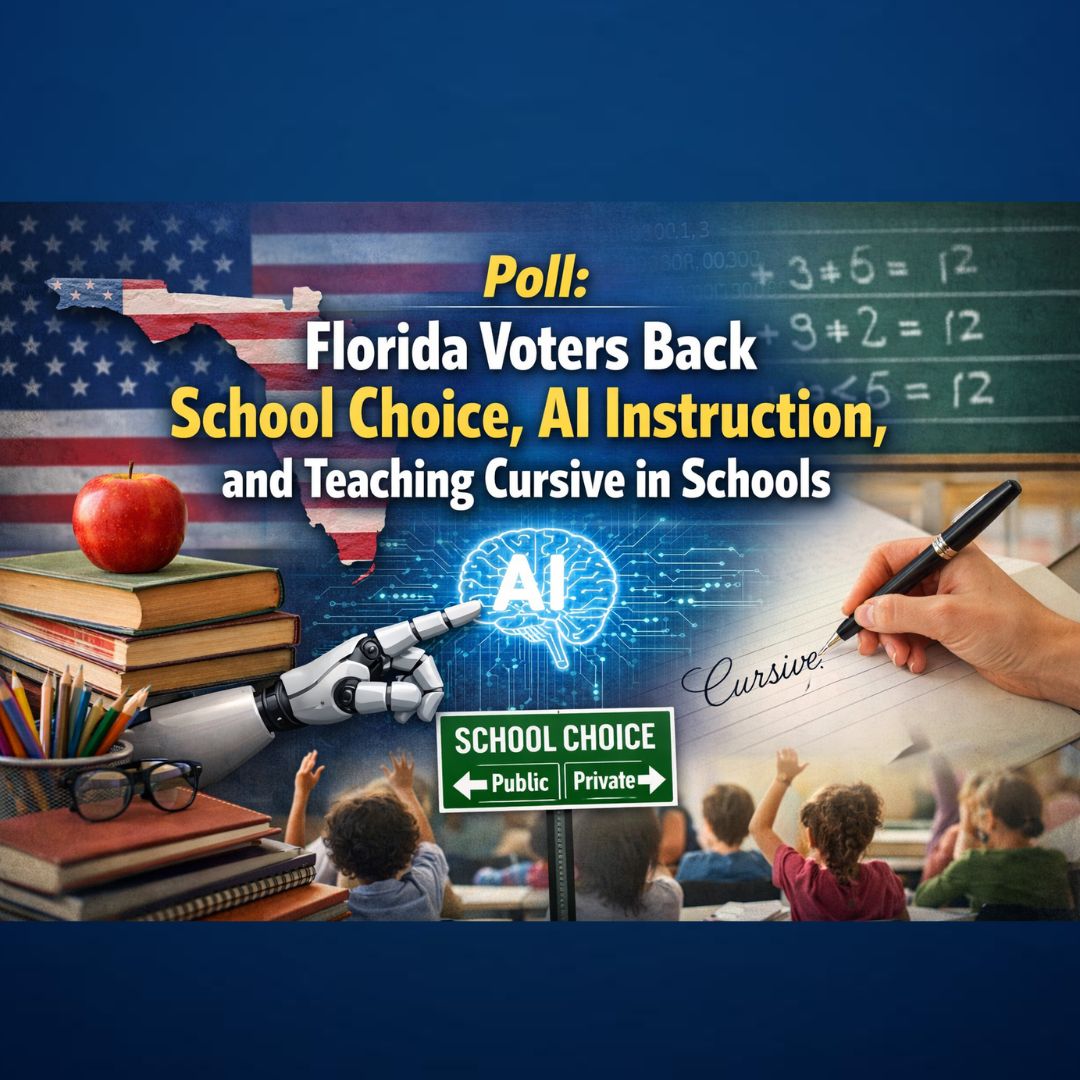
Final polling data collected by the James Madison Institute (JMI) reveals how Florida voters view the state’s current education system.
The results show strong support for both innovative and traditional education options for students and demonstrate a desire for an adaptable system that meets the state’s growing and diverse needs. In a world where costs don’t matter, voters lean toward private options, suggesting that “choice” is as much an aspiration as it is an ideology.
Voters support the “unbundling” of public education options, with 62% supporting paid individual courses, 25% opposed and 13% unsure.
There is support for utilizing unused space in schools, with 55% in favor of leasing it to private educators, 32% opposed and 13% unsure. Utilizing idle resources is attractive to voters.
If cost is not a barrier, private schools are your first choice. 43% prefer private school, 26% public, 19% homeschool, 11% charter, and 2% other. Voters want education options that go beyond their current options.

Voters want fewer barriers to creating new schools, with 68% supporting eliminating barriers, 18% opposed and 14% unsure.
AI in the classroom is viewed more positively than negatively. 54% feel positive about its use, 40% are negative and 6% are unsure. Younger Floridians (ages 18-44) are significantly more positive about AI in education (60-62%) compared to the 65+ cohort, with a 49% split being essentially positive.
A majority supports teaching students how to use AI safely. 62% support safe use guidance, 32% oppose and 7% are unsure. Voters are more open to AI than public debate suggests, especially when it comes to teaching students how to use AI safely.
Cursive is overwhelmingly popular, with 87% supporting cursive instruction, 8% opposed and 5% unsure. When it comes to classroom culture, voters support a “back to basics” approach, with high standards and traditional skills still resonating.
Demographics.
Florida’s population remains highly immigrant, with 39% of registered voters being first generation, 18% second generation, 16% third generation, 6% fourth generation, 4% fifth generation, and 17% unsure, indicating Florida’s immigrant nature.
Religious attendance rates varied, with 27% attending weekly, 11% attending several times a month, 15% attending annually, 46% rarely or never attending (23% each), and 1% not sure.

