


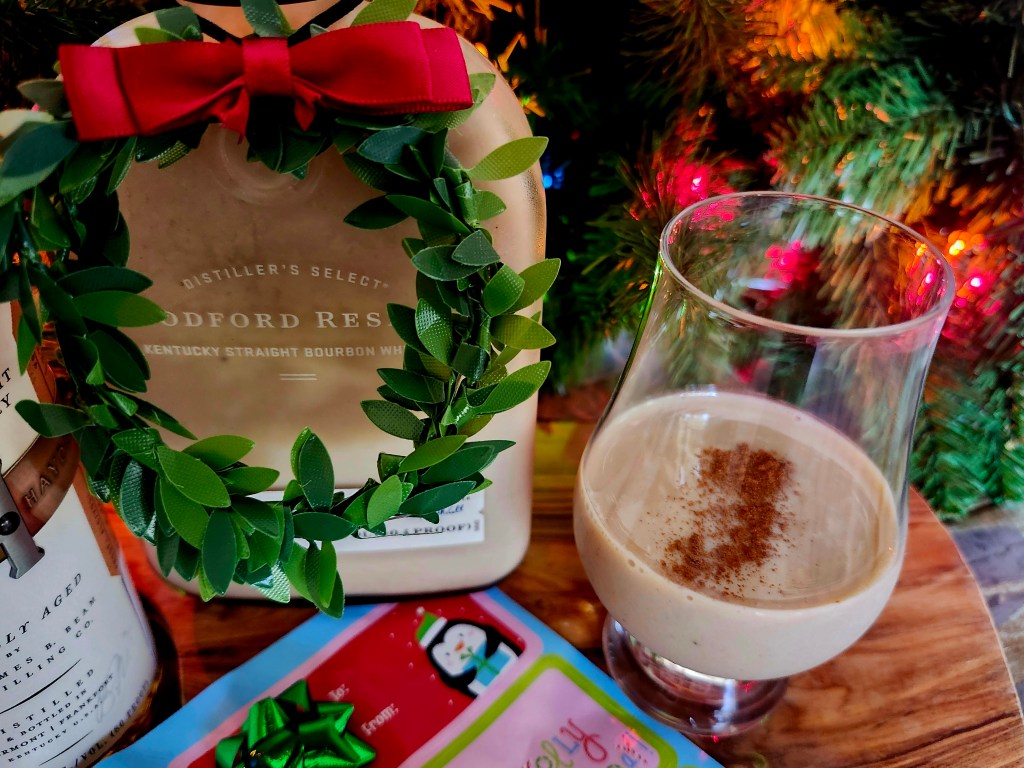
Why’s the rum gone?
My liquor cabinet is not a liquor cabinet. It’s a kitchen cabinet that’s largely devoted to booze, with a smattering of oversized platters and baking dishes, an old hand mixer and some light bulbs I can no longer use but for some reason still have, jammed into the shelf on top.
There are ancient bottles in here from my dad’s bar. And when I say bar, I mean the literal bar he operated back in the 1990s. Some aren’t even open.
There are bottles he bought on his travels — pisco from Peru and cachaça from Brazil — and a bottle of Caribou I brought back from Quebec City in 1999.
There is brandy and gin and vodka and mezcal and Italian apertivos. There is Japanese whisky. But, to my chagrin, there is no rum. Only empty rum bottles, mixed in with other empties, all of them saved for, well, for right now: coquito season.
This is why I’m looking for rum. Because in a couple of days, the Orlando Sentinel holiday staff party is coming up. We haven’t had one since 2019, pre-COVID-19, and the idea of getting together and seeing my colleagues is a warm and wonderful idea for someone who works largely in the diaspora.
The party is a potluck. But I am busy. I have vacation days that are supposed to be coming up (I’m typing this on what was supposed to be one of them right now, in fact). And sure, I could buy something and bring it. That’s entirely acceptable. But I’m the food reporter, for crying out loud. It feels wrong. And so, coquito.

Except I have no rum.
But as I sat on the floor, staring into the cabinet, waiting for a bottle of Flor de Caña (or perhaps something Puerto Rican instead) to magically appear, I noticed a large shape looming near the back.
It is a magnum of Four Roses Bourbon, something I grabbed because the last time I was in the liquor store, they had it on sale for $20.
This will be the solution to my problem.

Koquito.
The K, of course, stands for Kentucky.
I make it the way I made it last year, via a recipe shared by Yamuel Bigio, chef/owner of Crocante, whose coquito I love. His was the one that first inspired me to cook the coquito. The process of warming all the sweet milks along with the spices allows those flavors to meld. Bigio also inspired me to add fruit into the mix. He often uses raisins and/or cherries.
For me, the spirit of the season whispers dried cranberries, so festive in color, so tart, so Christmassy.
Bigio doesn’t just toss the fruit in and call it a day, though. He soaks it in rum ahead of time, inspired by another beverage from his native Puerto Rico: pitorro.

“It’s like moonshine,” says Bigio, ” a high-alcohol beverage, and the tradition for many people is to take this clean alcohol and add fruit. You could do coconut, raisins, peaches, cherries. And then you just let it sit. For months, sometimes. And when you are ready to drink it, the alcohol has become something beautiful and aromatic.”
I was in a little bit of a rush, but 24 hours in the booze was just fine for my Craisins. However, instead of using more bourbon, I covered them in brandy for their soak.
Arthur Boothe nods when I tell him this.
‘Tis the season for sharing of the coquito
Boothe, bartender and owner of the Suffering Bastard tiki bar, Death in the Afternoon and Lorelei Wine Bar, is a fan of mixing things up, traditionally and not so much.
“The basic building blocks of the coquito are going to be good with anything,” he says.
“You could put Kirschwasser (a clear cherry brandy) in there, and it’s going to be great. You could put some sort of anise in there, and it’s going to be great. It doesn’t matter. Because of how fatty and delicious everything that’s going into that is, I think it’s pretty hard to mess that up.”

And so, after dropping a bunch of these rehydrated cranberries into the bottom of the bottle, I measure out a shot of the jewel-toned brandy and pour it into the funnel, adding depth to the end result and color.
“I think there’s just a whole world of Bob Ross paints there,” says Boothe of the coquito canvas. “You can paint in all sorts of super fun ways, and because of that fattiness and sweetness of the overall ingredients, it’s gonna be fine.”
The coconut, he says, lends itself to a lot of creativity. Indian spices, for example.
“I just think of curries when I think of coconut,” he says. “I mix a small batch up with turmeric, just for myself, every year.”

And though this might be out of your comfort zone, bourbon as the primary spirit is a 100 percent love match.
“The idea of using whiskey makes sense anyway,” says Boothe, “because most rum is aged in whiskey casks, so you have a lot of whiskey influence in many rums.”
The cooking, he agrees, is imperative. Boothe’s team brings their coquitos up to temp in a sous vide bath.

“(The heat) helps the cinnamon and nutmeg and whatever other spices and flavors you use really absorb into the liquid. The spices will still separate when it sits, but cooking is the best way to get the flavors to integrate.”
Other spirits can work just as well, he says, offering that sherry (Boothe especially likes Pedro Ximénez) is a nice way to dry out some of the sweetness.
“(Renown bartender) Jeffery Morgenthaler is famous for doing a tequila-based eggnog, which is similar to coquito. I believe he uses an amontillado sherry in that, as well. There’s a lot of fun to be had in crossing over in the spirits.”
Bigio has never tried coquito with bourbon, but he’s eager to taste it.
“I bet it’s amazing,” he says.

The bottle disappeared pretty quickly at the party, so I’m happy with the result. I think it’s the best batch I’ve ever made, quite honestly, which is why I’m sharing it with you ahead of New Year’s Eve.
“As someone who has tinkered with coquito recipes — at times eliciting pleasant oohs and ahhs and sometimes, unfortunately, ewws and yucks — I appreciate daring creativity,” fellow Sentinel reporter Stephen Hudak said. “The cranberry flavor of yours was a delicious and surprising hint in a wonderful brew.”
Ah, yes, the fruity elements stood out to senior photographer extraordinaire Joe Burbank, as well.
“Those cranberries were delightful little flavor bombs of tart and sweet! Wow!”
What he enjoyed most: “It was boozy enough to balance the sweetness. I loved the change-up, going with whiskey over rum. It reminded me of the old Deep South classic, a Bourbon Milk Punch, but with way more depth in flavors.”
Many thanks to my tip-top taste testers. Perhaps one day, I’ll have a future in coquito sales, but this season, I’ll have to pass on the side hustle.
I have deadlines and a fractured vacation to finish, but I’m including Bigio’s basic coquito recipe below, along with some notes for my adds for the K-version, a mainland take on the Puerto Rican classic.

And if you’ve got your own holiday party to hit up, but have zero interest in even this low-level exercise, you can pop into either Crocante (4311 E. Colonial Drive in Orlando, 407-674-8021; crocantekitchen.com), where 750 ml bottles of coquito and sangria go for $25, or the Suffering Bastard (inside Tuffy’s Music Box & Lounge, 200 S. Myrtle Avenue in Sanford, facebook.com/profile.php?id=100063706380398#), where you can grab up a 375 ml bottle for $16.
Salud, y’all!
Want to reach out? Find me on Facebook, Twitter or Instagram @amydroo or on the OSFoodie Instagram account @orlando.foodie. Email: amthompson@orlandosentinel.com. For more fun, join the Let’s Eat, Orlando Facebook group.
Traditional Coquito
The below recipe is for traditional rum-based coquito. The above version simply swaps out the rum for your choice of bourbon. How much you use, of course, depends on your desired level of booziness.
I save my empty liquor bottles to fill with coquito every holiday season. If you don’t have any, a quick search on Amazon will yield many options for purchase.
If you like the idea of the cranberry-brandy accent, soak about 1/3 cup dried cranberries in brandy (or bourbon or rum or whatever spirit you want to play with) for a minimum of 24 hours before making the coquito, and add a shot of the liquid either in addition to the alcohol you’ll be using or blending it in with the total pour.
Of course, coquito is delicious sans alcohol for those who want all the holiday flavor and none of the boozy effects. Simply omit all the “adult” elements and make the recipe the same way. The spices will often separate if the bottle sits, so simply give it a shake before serving.
I like to tie ribbons or ornaments to the bottle, too, if I’m bringing it as a gift.
Ingredients
1 can Coco Lopez
1 can evaporated milk
1 can sweetened condensed milk
4 to 8 oz. dark rum
1 teaspoon vanilla (or paste from 1 vanilla bean)
3/4 tablespoon cinnamon
Lil’ bit of nutmeg (best when you grate it from the whole kernel)
Other spices you might consider: Clove, ginger, allspice, anise. Cinnamon sticks for garnish.
Directions
At least 24 hours before making the coquito, place dried cranberries in container and fill with brandy until fruit is covered. Let sit until time to use.
When ready to make coquito, combine all milks and spices in a pot, heat on stove over low medium heat.
Stir constantly (perhaps even using whisk to help spices incorporate) and bring up to relatively high heat. Just about where you couldn’t use you finger to taste. Do not boil.
Once peak temperature has been achieved, allow mixture to cool, eventually transferring to fridge.
If using, add cranberries to the bottle first. Then, using a funnel, add liquor, then fill the rest of the way with coquito mixture.
